
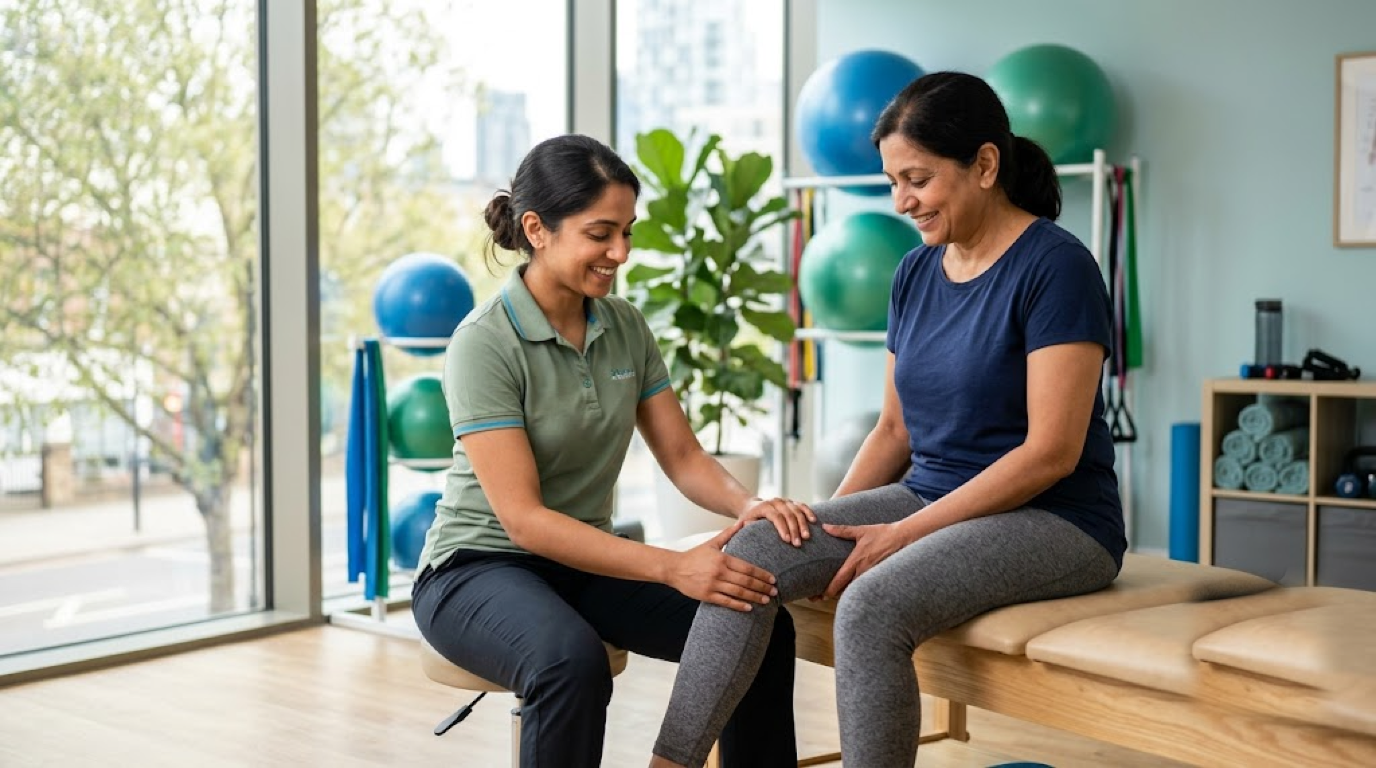
Understand common causes of adult knee pain and how physiotherapy can help with safer movement, strength and daily function.
Knee pain can make simple things like climbing stairs, sitting cross-legged, walking to work or standing in the kitchen feel difficult. In adults, it may come from an injury, repeated strain, age-related joint changes or weakness around the hip and knee.
At The RNB Clinic in Ranchi, physiotherapy starts with understanding your symptoms, lifestyle and movement pattern. The aim is not to promise a quick cure, but to help you manage pain, build strength and return to daily activities more confidently.
Common causes of knee pain in adults
Knee pain after a twist, fall or sudden change of direction may involve a sprain, meniscus irritation, ligament injury or muscle strain. Pain that builds gradually is often linked with overuse, poor load management, reduced strength or altered walking and squatting mechanics.
Osteoarthritis is another common cause, especially when pain comes with stiffness, swelling or difficulty after sitting for long periods. Tendon pain, bursitis, kneecap tracking issues and referred pain from the hip or back can also affect the knee.
When knee pain needs medical attention
Seek urgent medical help if the knee is badly swollen, looks deformed, feels hot and red with fever, or you cannot bear weight. Locking, repeated giving way, severe pain after injury or sudden calf swelling should also be assessed promptly.
If pain is mild but keeps returning, lasts more than a couple of weeks or limits walking, stairs or work, a physiotherapy assessment can help identify contributing factors and guide safe next steps.
How physiotherapy assessment helps
A physiotherapist will usually ask about where the pain is, when it started, what worsens or eases it, and how it affects your routine. They may check swelling, range of motion, strength, balance, walking, stair climbing and specific knee movements.
This assessment helps separate likely causes and decide whether physiotherapy is appropriate or whether referral for medical review or imaging is needed. Many knee problems do not require scans at the start, but they may be useful when symptoms suggest a more serious injury.
Physiotherapy management for knee pain
Treatment often includes education about pacing, activity modification and graded loading. Exercises may focus on the quadriceps, hamstrings, calves, glutes and hip muscles, because the knee works as part of the whole lower limb.
Manual therapy, taping, mobility work and balance training may be used when suitable, but exercise and self-management usually remain central. For osteoarthritis, evidence supports tailored strengthening, general physical activity and weight management where relevant.
A good plan should match your pain level, age, work demands and goals, whether that means walking around Ranchi more comfortably, returning to sport or managing stairs at home.
What you can do at home
In the early stage of a flare-up, reducing aggravating load, using ice for swelling and avoiding repeated deep bending may help. Gentle movement is usually better than complete rest, as long as it does not sharply increase pain.
Avoid copying random exercise routines if they make symptoms worse. Start with simple, tolerable movements and progress gradually. If pain increases and stays worse the next day, the load may be too high for now.
Frequently Asked Questions
Take the next step
Ready to Start Your Treatment?
Book a consultation with our expert physiotherapists. No referral needed.
Book AppointmentRelated Articles
Sciatica Pain: How Physiotherapy May Help Avoid Surgery
Learn how physiotherapy can reduce sciatica pain, improve movement, and help many people avoid or delay surgery safely.

Frozen Shoulder: Stages, Exercises and Physio Care
Learn the stages of frozen shoulder, safe exercises, and how physiotherapy can help reduce pain and restore shoulder movement.