Physiotherapy Treatments
Comprehensive, evidence-based physiotherapy treatments delivered by expert therapists at The RNB Clinic, Ranchi. From acute injuries to long-term rehabilitation.
Category
Musculoskeletal & Orthopaedic
Treatment for bones, joints, muscles, and connective tissue conditions including back pain, knee pain, and sports injuries.

Musculoskeletal & Orthopaedic
Back & Spine Treatment
Comprehensive physiotherapy for lower back pain, disc herniation, sciatica, and spinal rehabilitation.

Musculoskeletal & Orthopaedic
Neck & Shoulder Pain Management
Specialist treatment for cervical spondylosis, frozen shoulder, rotator cuff injuries, and neck pain.
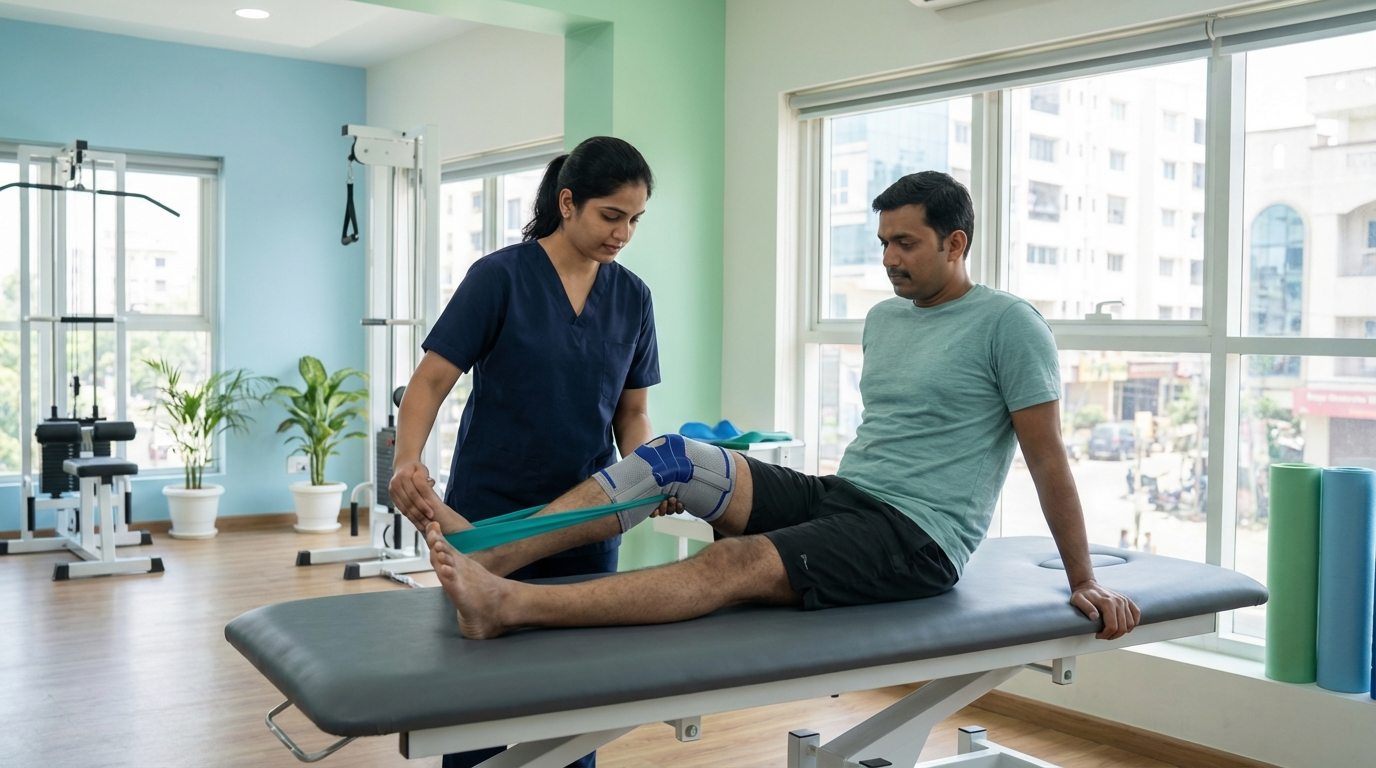
Musculoskeletal & Orthopaedic
Knee & Joint Rehabilitation
Physiotherapy for knee pain, osteoarthritis, ligament injuries, and post-joint replacement recovery.
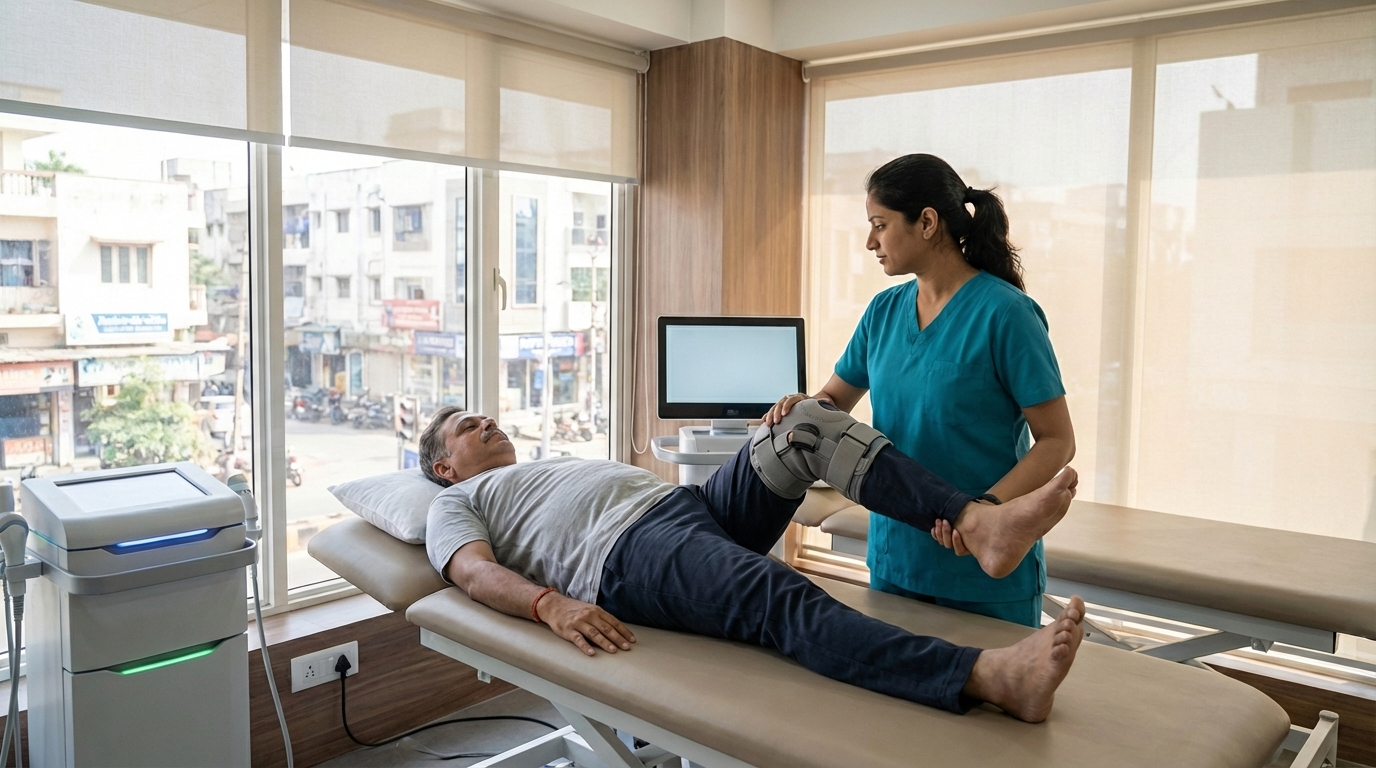
Musculoskeletal & Orthopaedic
Post-Surgical Rehabilitation
Structured physiotherapy recovery programmes after orthopaedic and spinal surgery.
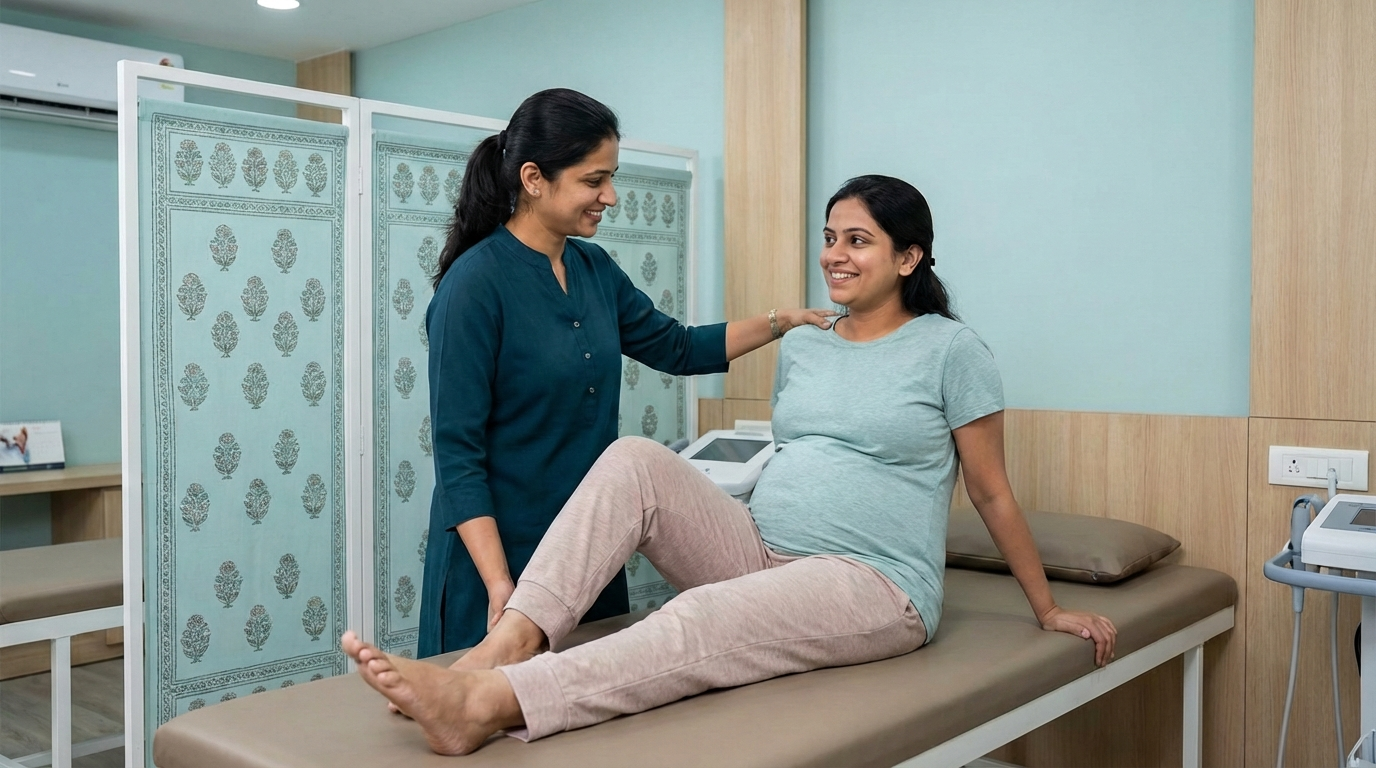
Musculoskeletal & Orthopaedic
Women's Health Physiotherapy
Specialist physiotherapy for pregnancy-related pain, pelvic floor issues, and post-natal recovery.

Musculoskeletal & Orthopaedic
Electrotherapy & Ultrasound
Advanced electrotherapy modalities including TENS, IFT, ultrasound, and laser therapy for pain relief.

Musculoskeletal & Orthopaedic
Dry Needling & Manual Therapy
Advanced hands-on physiotherapy using dry needling, joint mobilisation, and soft tissue techniques.
Category
Neurological Rehabilitation
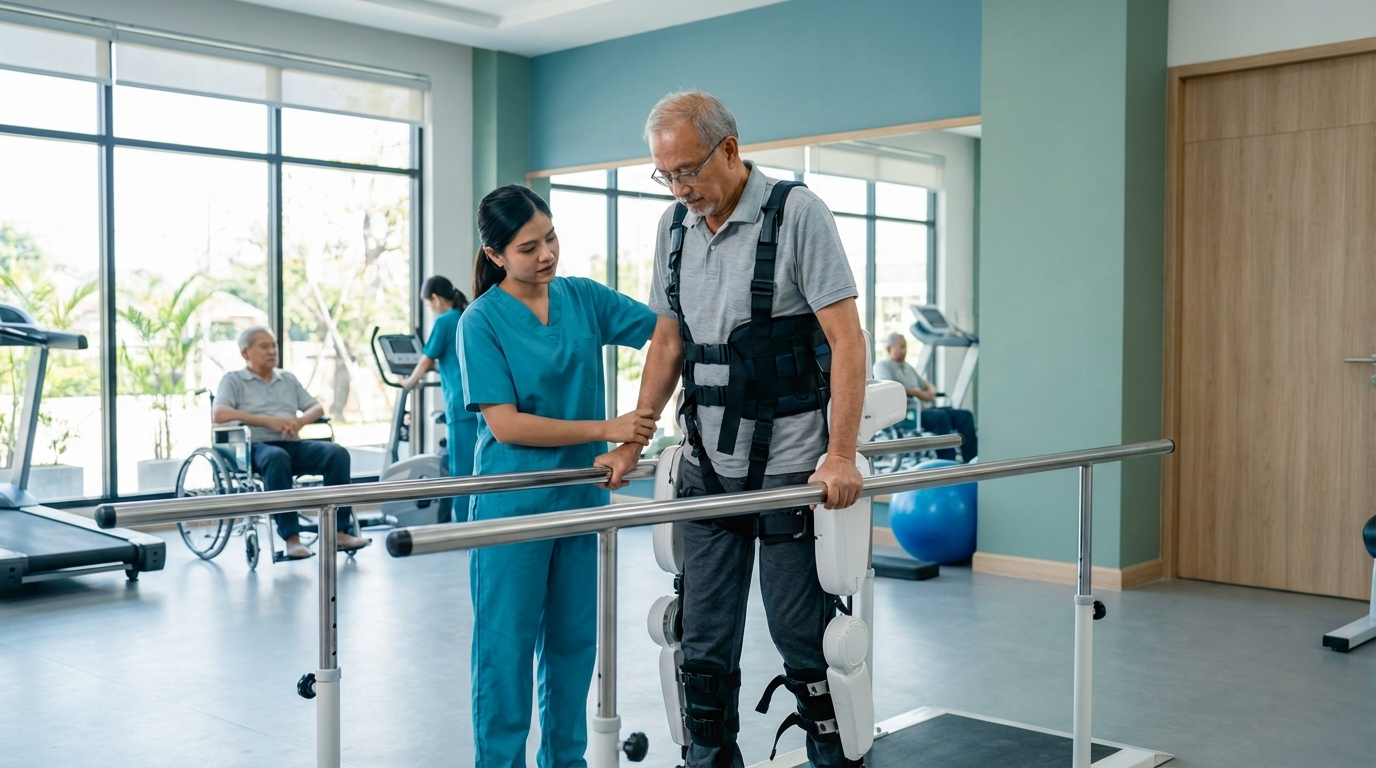
Specialist physiotherapy for stroke, spinal cord injuries, Parkinson's disease, and other neurological conditions.
Category
Paediatric Physiotherapy
Specialised care for children with developmental delays, cerebral palsy, and musculoskeletal conditions.

Category
Sports & Exercise Therapy
Evidence-based rehabilitation and performance optimisation for amateur and competitive athletes.

Not sure which treatment you need?
Most people arrive knowing what hurts, not which service to book, and that is completely normal. You do not have to diagnose yourself before you come in. If you are unsure, book a general assessment and we will work out the right pathway with you. Booking the “wrong” service is not a problem either, because the assessment comes first in every case and we simply redirect you.
As a rough guide: pain that started after a specific movement, lift or awkward position usually belongs with our back, neck or joint services. Pain that came on after sport or training, or that stops you returning to it, fits sports injury recovery. If you are recovering from an operation, post-surgical rehabilitation is designed around your surgeon's protocol. Problems with walking, balance, weakness or coordination after a stroke or with a neurological condition belong with neurological rehabilitation. Dry needling, manual therapy and electrotherapy are techniques used inside a treatment plan rather than standalone answers, so they are usually added to one of the above.
What happens at your first appointment
The first session is mostly assessment, not treatment. We ask how the problem started, what makes it better or worse, what you have already tried, what medication you take and what you need to get back to, whether that is work, caring for family, prayer positions, driving or sport. We then examine you: how you move, how much range you have, what is painful, what is weak, and how it affects the joints above and below.
You will get an explanation of what we think is going on in plain language, an outline of what treatment would involve and roughly how long it usually takes, and normally a small number of exercises to begin at home. If we think the problem is not primarily a physiotherapy problem, we will tell you that and suggest who to see instead.
Wear or bring clothing that lets us see and move the affected area comfortably. Bring any scans, discharge summaries or operation notes you have, and a list of your current medicines. A referral letter is not required to see a physiotherapist here.
How a course of treatment usually works
Physiotherapy is rarely a single visit. Most problems are reviewed over several sessions so that treatment can be progressed as you improve, and so exercises can be made harder, easier or simply different if they are not working. How many sessions that takes depends on the condition, how long it has been present and what you are aiming for, and we would rather tell you honestly at the reassessment than commit you to a fixed package at the start.
What you do between appointments matters more than what happens in the clinic. A short routine done consistently on most days generally outperforms a long one done occasionally. If the home programme is not fitting into your day, say so, because a plan you will actually follow is worth more than an ideal one you will not.
We do not promise cures or fixed timelines. Some conditions resolve, some are managed so that they interfere less with daily life, and being clear about which is which is part of the assessment. If a symptom suggests you should see a doctor first, we will say so before starting treatment.