Sports & Exercise Therapy
Sports Injury Recovery
Fast-track rehabilitation for sports injuries to get athletes back to peak performance safely.
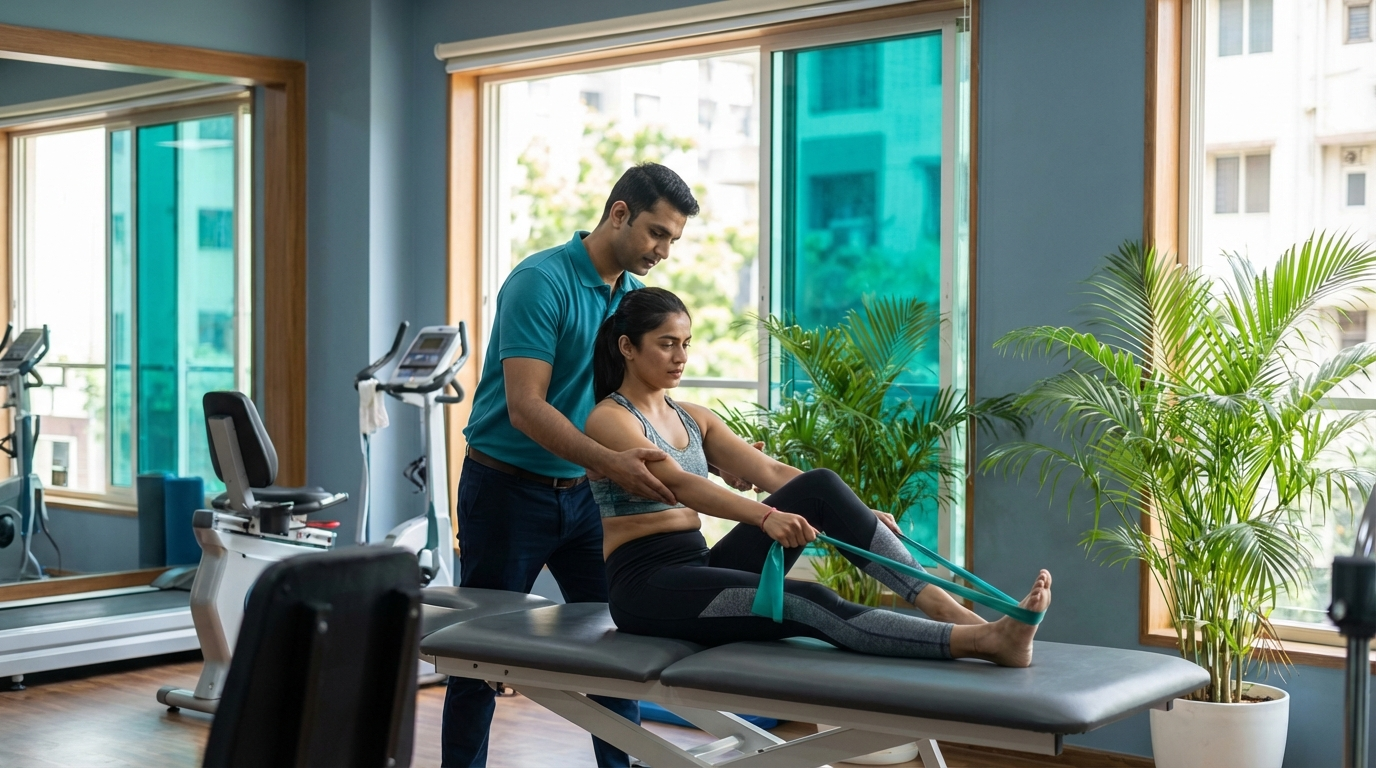
Sports Injury Rehabilitation in Ranchi
Whether you're a weekend runner or a competitive athlete, sports injuries need expert management to ensure full recovery and prevent re-injury. Our sports physiotherapy team combines the latest evidence-based techniques with sport-specific rehabilitation.
Injuries We Treat
- Hamstring, quad, and calf muscle strains
- ACL, PCL, and knee ligament injuries
- Tennis elbow and golfer's elbow
- Plantar fasciitis and Achilles tendinopathy
- Shoulder dislocations and labral tears
- Stress fractures and shin splints
- Hip flexor and groin strains
Return to Sport Programme
Our structured return-to-sport protocol ensures you're physically and psychologically ready before returning to competition. We use functional movement screening, strength testing, and sport-specific drills to verify readiness.
What your first sports injury session involves
We need the mechanism of injury in detail: what you were doing, which direction the joint went, whether you heard anything, whether you could continue, and how quickly swelling appeared. Those answers usually identify the tissue involved before we touch anything. Assessment then covers the injured area and the whole chain around it, along with the demands of your sport, your training load in the weeks before the injury, and the date of any event you are working toward.
How a course of treatment usually runs
Rehabilitation moves through recognised stages: settle the acute symptoms, restore range of movement, rebuild strength, then reintroduce speed, change of direction and sport specific drills. Timelines depend on the tissue rather than on willpower. A mild muscle strain may take two to three weeks, a moderate hamstring tear six to eight, and tendon problems commonly need three months or more of progressive loading. Returning before the final stage is complete is the single biggest cause of re-injury, which is why we test readiness rather than relying on how the injury feels at rest.
What helps between appointments
- Complete the loading programme as prescribed. Tendons in particular respond to consistent load, not rest.
- Keep training the rest of the body so overall fitness does not drop while the injury heals.
- Increase training volume gradually when you return rather than resuming your previous week in one step.
- Sleep and nutrition affect tissue healing more than most athletes expect.
- Report any new pain that changes location or character rather than working through it.
When to see a doctor first
Get medical assessment before physiotherapy if you cannot bear weight at all, if a joint looks deformed, if there is immediate and severe swelling suggesting bleeding within the joint, if you felt a sudden snap at the back of the ankle or thigh with loss of function, or if numbness or coldness develops beyond the injury. Suspected fractures and complete tendon ruptures need imaging first.
Conditions We Treat
Ready to Start Your Recovery?
Book your assessment today and take the first step towards pain-free living.