Neurological Rehabilitation
Stroke & Neurological Rehabilitation
Specialist neuro-physiotherapy for stroke survivors, Parkinson's disease, and spinal cord injury recovery.
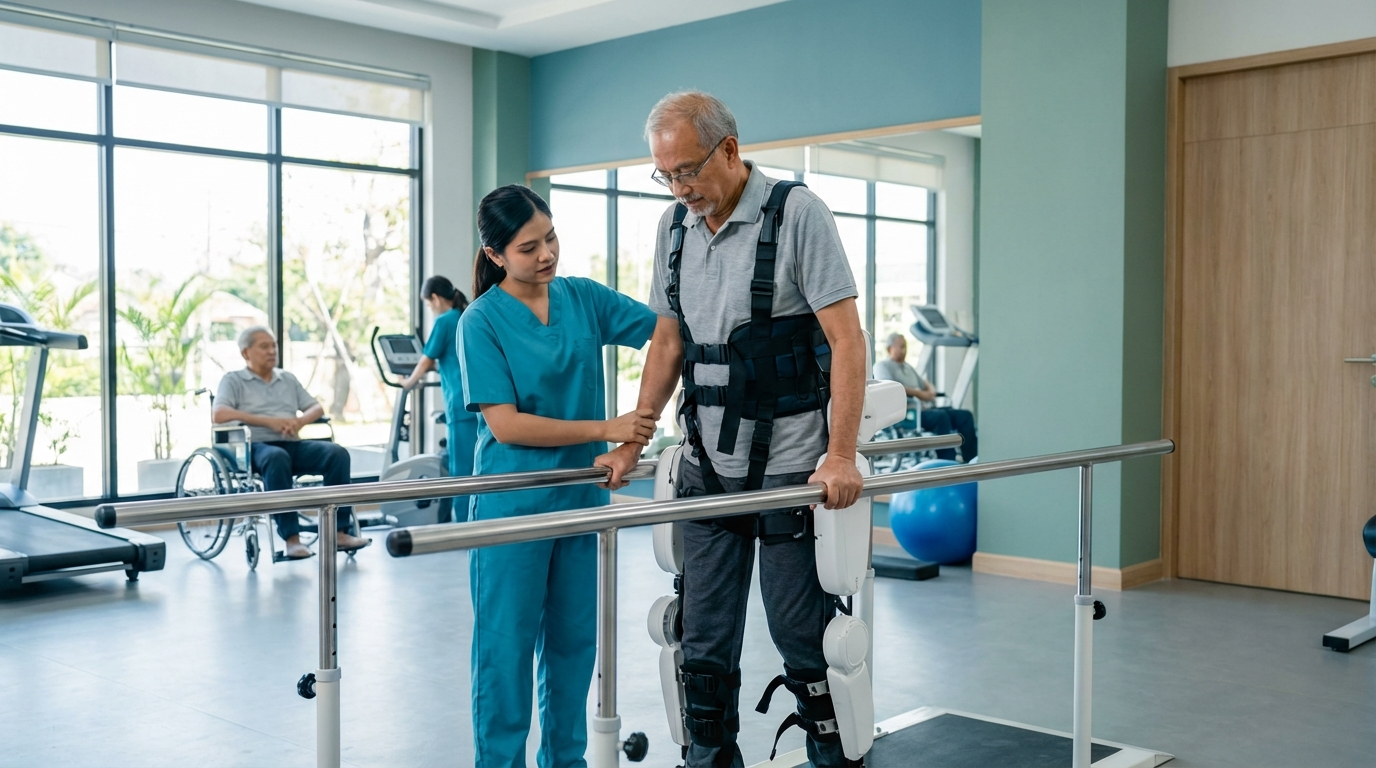
Neurological Physiotherapy in Ranchi
Neurological conditions require specialist physiotherapy that understands the brain's capacity to adapt and rewire, a property known as neuroplasticity. Our neurological rehabilitation programme harnesses this to maximise your recovery.
Conditions We Treat
- Stroke and hemiplegia
- Parkinson's disease
- Multiple sclerosis
- Traumatic brain injury
- Spinal cord injury
- Guillain-Barré syndrome
- Functional neurological disorder
Neurological Physiotherapy Techniques
We use evidence-based approaches including task-specific training, balance and coordination exercises, gait re-training, and constraint-induced movement therapy to restore independence and quality of life.
What your first neurological session involves
The first appointment is longer than a typical musculoskeletal assessment because there is more to cover. We look at muscle tone, voluntary control, balance in sitting and standing, transfers, and walking where that is possible. We ask what a normal day looks like at home, which tasks have become difficult, what support is available, and what matters most to you, since a programme built around washing, dressing and moving safely around your own home works better than one built around abstract exercises. Family members are welcome, as much of the progress happens between sessions.
How a course of treatment usually runs
Neurological rehabilitation is measured in months rather than weeks. Recovery after stroke is typically fastest in the first three to six months, but meaningful gains in function and independence continue well beyond that with consistent practice, which is why we do not treat the early period as the only window. Progressive conditions such as Parkinson's disease or multiple sclerosis are approached differently again, with the aim of maintaining function, safety and confidence over time. Progress is tracked with repeatable measures so change is visible even when it feels slow.
What helps between appointments
- Frequent short practice beats occasional long sessions. Repetition is what drives neural adaptation.
- Use the affected side in everyday tasks wherever it is safe, rather than compensating entirely with the stronger side.
- Keep walkways clear and well lit, and remove loose rugs to reduce falls risk.
- Sit to do tasks that feel unsteady standing, at least until balance improves.
- Tell us about any fall, even one without injury, as it changes what we prioritise.
When to seek urgent medical help
Stroke symptoms are a medical emergency. If a face droops on one side, an arm drifts down when raised, or speech becomes slurred or confused, call emergency services immediately rather than waiting for a physiotherapy appointment. Also seek urgent review for a sudden change in weakness or sensation, a new severe headache, new difficulty swallowing, or any sudden loss of function in someone with an existing neurological condition.
Conditions We Treat
Ready to Start Your Recovery?
Book your assessment today and take the first step towards pain-free living.