
Paediatric Physiotherapy
Paediatric Physiotherapy
Child-centred physiotherapy for developmental conditions, cerebral palsy, and musculoskeletal problems in children.
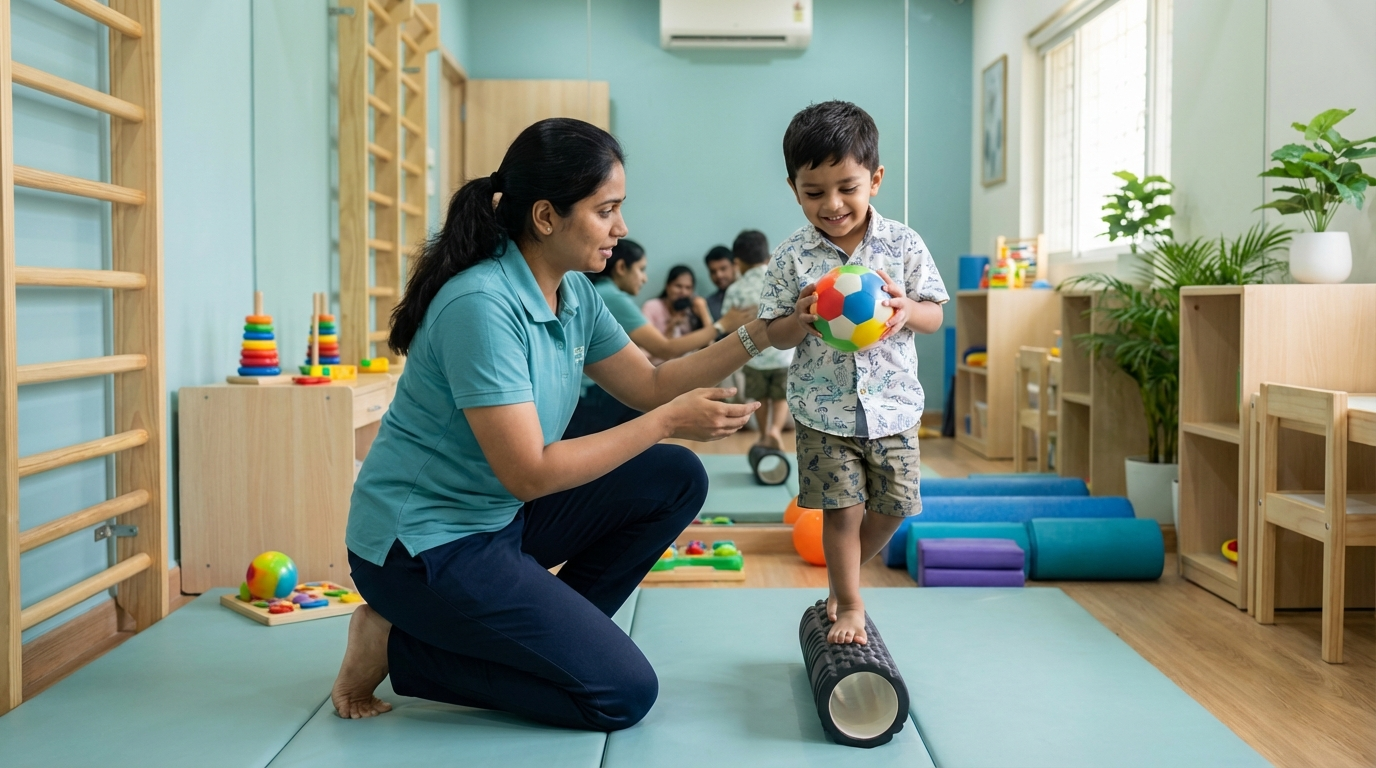
Paediatric Physiotherapy in Ranchi
Children are not small adults, they have unique physiological needs and respond differently to treatment. Our paediatric physiotherapy team creates engaging, play-based programmes that children enjoy while making measurable progress.
Conditions We Treat in Children
- Cerebral palsy (all types)
- Developmental coordination disorder
- Muscular dystrophy
- Scoliosis and spinal conditions
- Flat feet and gait abnormalities
- Torticollis (wry neck)
- Sports injuries in young athletes
What your child's first session involves
The first appointment is deliberately unhurried and looks a lot like play. We watch how your child moves, sits, stands, reaches and walks, and much of the assessment happens while they are exploring the room rather than being examined. Parents are asked about pregnancy and birth, developmental milestones, how your child manages at home and at school, and what you have noticed that prompted the referral. Parents usually spot changes long before formal tests do, so that history carries real weight.
How a course of treatment usually runs
Children's programmes are built around goals that make sense to the family, such as sitting unsupported, walking further without tiring, managing stairs, or keeping up in the playground. Sessions are short and game based because attention spans are, and the exercises are designed so they can be repeated at home during ordinary routines. Frequency depends on the condition: some children attend weekly during a block of intensive work then move to periodic review, while others with long term conditions such as cerebral palsy benefit from ongoing support that adapts as they grow, particularly through growth spurts when muscle length changes quickly.
What helps between appointments
- Fold the exercises into daily routines rather than setting a separate practice time.
- Keep sessions short and stop while your child is still enjoying it.
- Encourage floor play and active movement rather than long periods in seats or walkers.
- Tell us about changes at school or nursery, as these often reveal what to target next.
- Bring supportive footwear and any orthotics to appointments so we can check the fit as your child grows.
When to see a doctor first
Speak to your paediatrician before booking physiotherapy if your child loses a skill they previously had, if there is a sudden change in muscle tone or alertness, if one side of the body is consistently used far more than the other in a young baby, or if there is pain with fever, limping without injury, or a joint that becomes hot and swollen. A child refusing to bear weight on a limb should be assessed medically first.
Conditions We Treat
Ready to Start Your Recovery?
Book your assessment today and take the first step towards pain-free living.