
Musculoskeletal & Orthopaedic
Knee & Joint Rehabilitation
Physiotherapy for knee pain, osteoarthritis, ligament injuries, and post-joint replacement recovery.
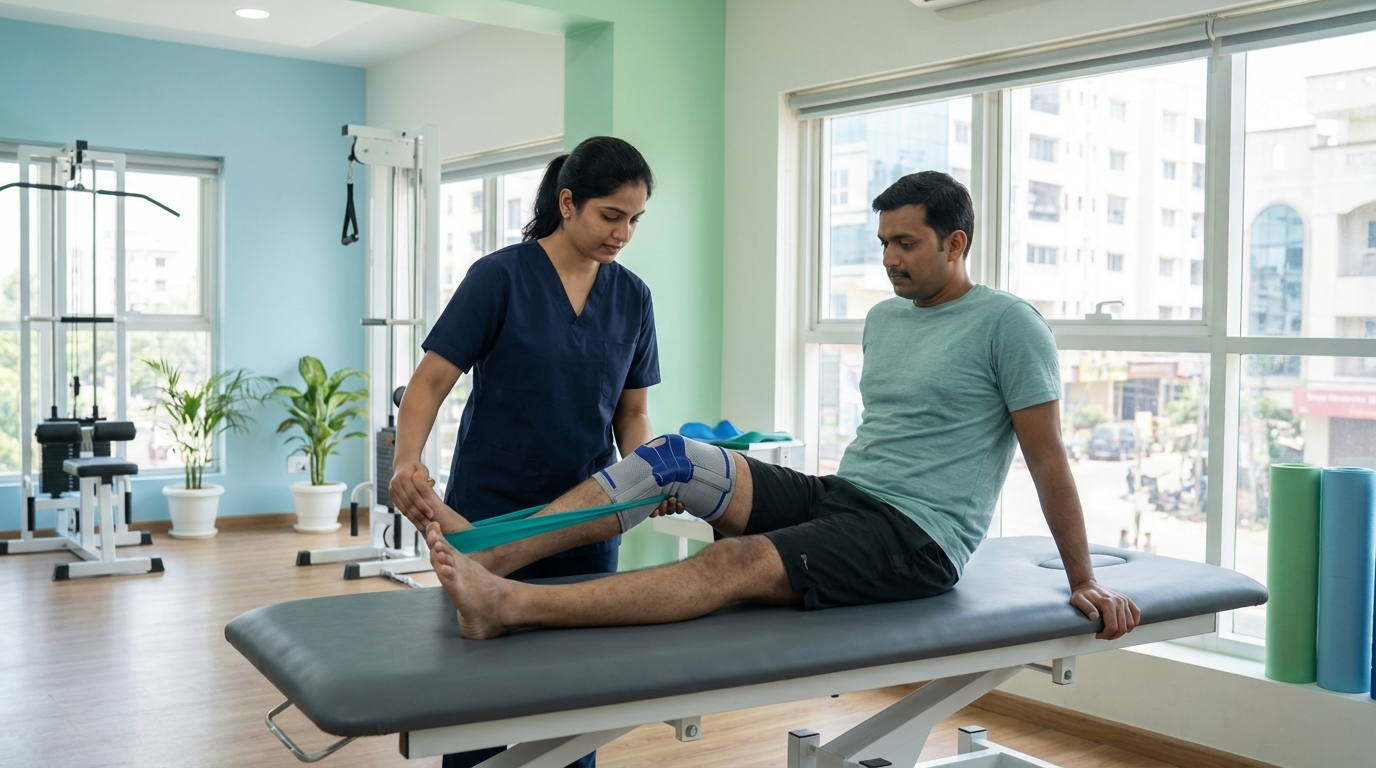
Knee & Joint Physiotherapy in Ranchi
Knee and joint conditions can limit your ability to walk, climb stairs, and enjoy everyday activities. Our targeted rehabilitation programmes help you regain strength, stability, and confidence.
Conditions We Specialise In
- Knee osteoarthritis
- ACL and ligament injuries
- Meniscal tears and patellofemoral syndrome
- Post total knee replacement rehab
- Hip osteoarthritis and hip replacement recovery
- Ankle sprains and instability
- Rheumatoid arthritis joint management
Our Rehabilitation Approach
We design progressive exercise programmes that rebuild muscle strength around affected joints, improve proprioception, and restore functional movement patterns for your specific goals.
What your first knee and joint session involves
We start by watching you walk, stand from a chair and where appropriate climb a step, because how the joint loads in real movement tells us more than a static examination. The knee is then assessed for swelling, range of movement, ligament stability and the strength of the quadriceps and hip muscles. Hip and ankle mechanics are checked too, since knee pain frequently originates above or below the joint itself. If you have an arthritis diagnosis or a surgical report, bring it, as it shapes how quickly loading can progress.
How a course of treatment usually runs
Knee osteoarthritis is managed rather than cured, and the evidence for progressive strengthening is strong: most people notice reduced pain and better function within six to twelve weeks of consistent work, and benefits continue for as long as the programme is maintained. Ligament and meniscal injuries follow their own timelines, and after ACL reconstruction full rehabilitation typically runs nine to twelve months before return to pivoting sport. Joint replacement recovery is fastest in the first three months, with continued gains for up to a year.
What helps between appointments
- Strength work is the treatment, not the homework. Missing it is the most common reason progress stalls.
- Keep walking within a level that does not leave the knee swollen the next morning.
- Manage body weight where possible, since load through the knee rises steeply with each additional kilogram.
- Use a stick in the opposite hand if it lets you walk further with less pain.
- Expect some discomfort during exercise. Sharp pain or lasting swelling means the load was too high.
When to see a doctor first
See a doctor before starting physiotherapy if the knee locks and will not straighten, gave way completely at the time of injury, became hot, red and swollen quickly, or is painful alongside fever. A joint that cannot bear any weight after an injury should be assessed medically to rule out fracture before rehabilitation begins.
Conditions We Treat
Ready to Start Your Recovery?
Book your assessment today and take the first step towards pain-free living.