

Learn how physiotherapists use hands-on manual therapy and exercise therapy together for pain, mobility, strength, and recovery.
If you have back pain, neck stiffness, shoulder trouble, or knee pain, you may wonder whether physiotherapy means hands-on treatment or exercises. In real practice, physiotherapists often use both, depending on your assessment, symptoms, goals, and daily activities.
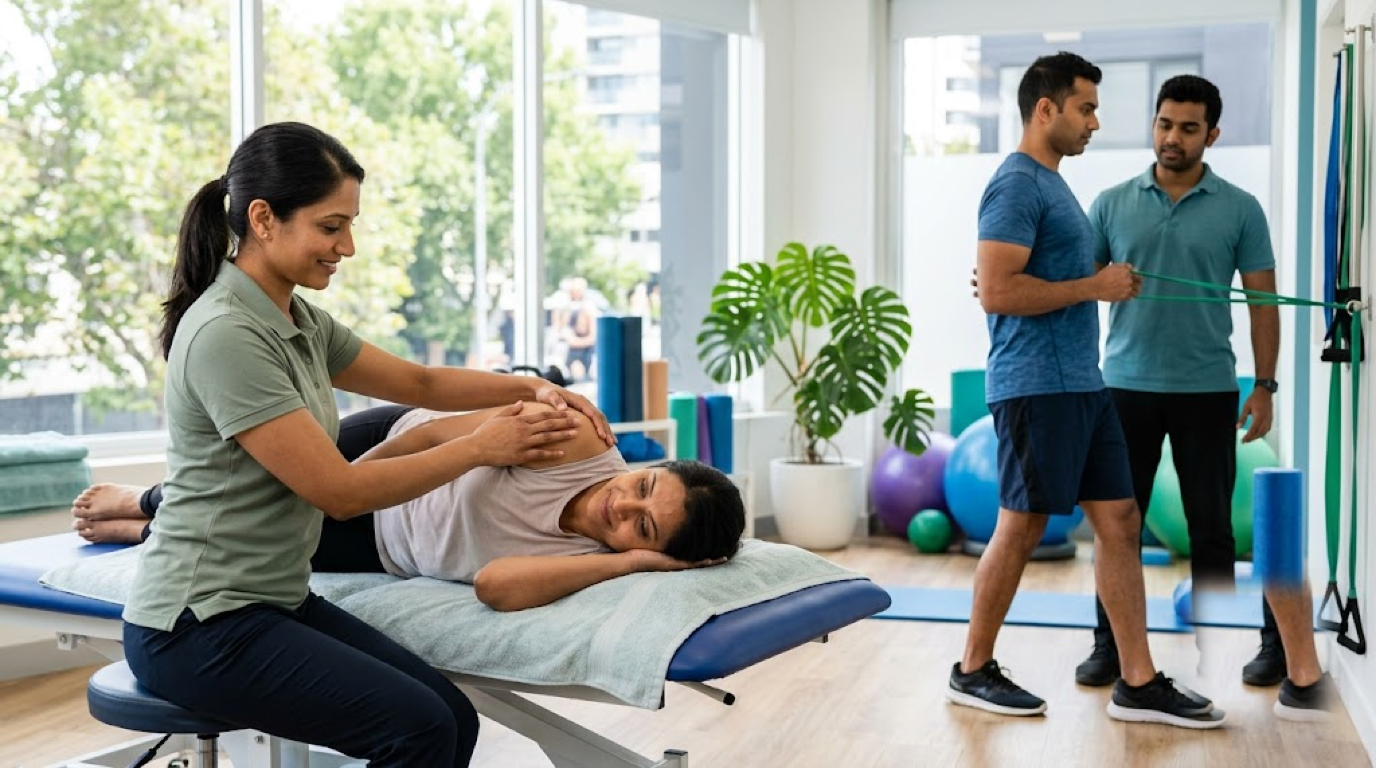
At The RNB Clinic in Ranchi, the aim is not to choose a favourite technique, but to choose the right mix for the person in front of us. Manual therapy may help calm pain and improve movement in the short term, while exercise therapy builds the strength, control, and confidence needed for lasting function.
What manual therapy means
Manual therapy is hands-on care provided by a trained physiotherapist. It may include joint mobilisation, gentle manipulation, soft-tissue techniques, stretching, or guided movement of a stiff area.
People often feel manual therapy is useful when pain, guarding, or stiffness makes movement difficult. It can be especially helpful early in treatment, when the body needs a little support before more active work feels possible.
Manual therapy should not feel like a magic fix or a forceful routine done the same way for everyone. A good physiotherapist explains why a technique is being used, checks your comfort, and adjusts based on your response.
What exercise therapy means
Exercise therapy is planned movement used as treatment. It can include mobility drills, strengthening, balance work, posture and control exercises, walking plans, sport-specific training, or graded return to work tasks.
The exercises should match your condition and your current capacity. For example, someone with shoulder pain may begin with gentle range work and progress toward resistance training, while someone with knee pain may need hip, thigh, and balance exercises.
Exercise therapy is often central because it helps you participate in your own recovery. It gives the body repeated, meaningful practice so daily activities become easier and less worrying over time.
Why physiotherapists often combine both
Research-informed physiotherapy commonly uses manual therapy as part of a broader plan, not as the whole plan. For many musculoskeletal problems, hands-on treatment may reduce pain or improve movement enough to make exercise more comfortable.
Exercise then helps maintain and build on that improvement. This is why a session may include some treatment on the table, followed by supervised movement, home exercises, and advice about activity, sleep, sitting, lifting, or training load.
The best balance changes from person to person. Some people need very little manual therapy and more coaching. Others need hands-on work first, then a gradual shift toward independent movement.
How your physiotherapist decides
A physiotherapist should first listen to your story: where it hurts, how it started, what makes it better or worse, and what you need to get back to. They then check movement, strength, sensitivity, function, and warning signs that may need medical referral.
The plan may change over visits. If pain settles but weakness remains, exercise becomes more important. If a movement is blocked by stiffness or fear, manual therapy, education, and graded exposure may be used together.
For people in Ranchi managing busy workdays, travel, household duties, or sports, a practical plan matters. Treatment should fit your routine, not depend only on clinic visits.
What to expect from good care
Good physiotherapy is collaborative. You should understand what is being treated, what you can do at home, what progress may look like, and when the plan needs review.
No treatment should promise a guaranteed cure. Pain and recovery are influenced by injury type, health history, stress, sleep, activity level, and consistency with the plan.
The goal is steady improvement in comfort, movement, confidence, and function. Manual therapy can help open the door; exercise therapy often helps you keep walking through it.
Frequently Asked Questions
Take the next step
Ready to Start Your Treatment?
Book a consultation with our expert physiotherapists. No referral needed.
Book AppointmentRelated Articles

Manual Therapy vs Exercise Therapy: What Physios Use
Learn how physiotherapists use hands-on care and exercise together for pain, movement, strength, and confidence.
Manual Therapy vs Exercise Therapy: What Physios Use
Learn how physiotherapists use hands-on treatment and exercise therapy together for pain, movement, and recovery support.