
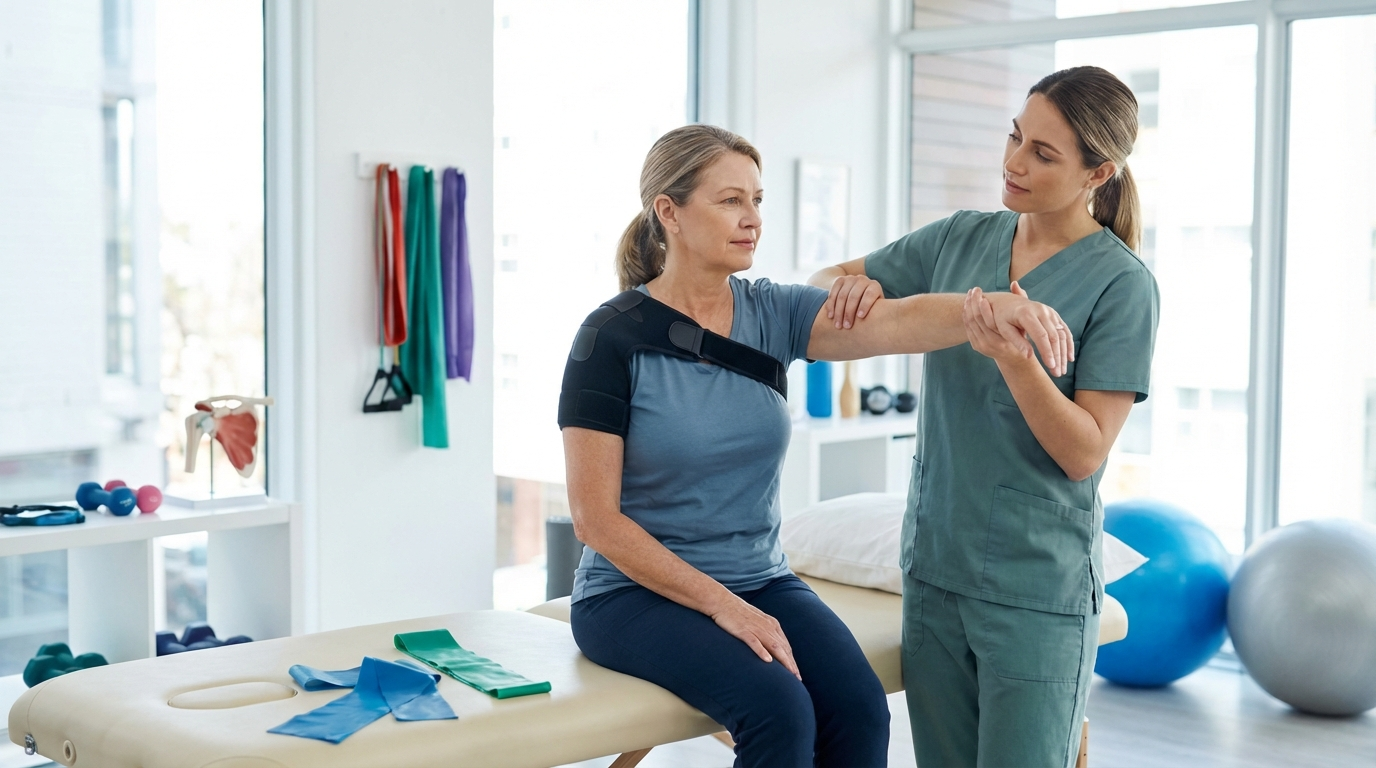
Falls are a leading cause of injury in older adults. Learn how physiotherapy assesses fall risk, improves balance and strength, and preserves independence.
Falls in Older Adults: A Serious Public Health Issue
Falls are the leading cause of injury-related death and disability among adults over sixty-five. Approximately one in three older adults falls each year, and falls are the most common cause of hip fractures, head injuries, and loss of independence. Fear of falling, even in those who have not fallen, is associated with reduced activity, social isolation, and rapid decline in physical function.
Risk Factors for Falls
- Muscle weakness, particularly in the legs and hips
- Impaired balance and proprioception
- Visual impairment
- Multiple medications (polypharmacy), especially sedatives, antihypertensives
- Home hazards, loose rugs, poor lighting, no grab bars
- Cognitive impairment and dementia
- Previous fall history, the strongest predictor of future falls
- Low vitamin D levels
- Parkinson's disease and other neurological conditions
How Physiotherapy Reduces Fall Risk
Comprehensive Falls Risk Assessment
A physiotherapy falls assessment identifies specific modifiable risk factors using validated tools such as the Berg Balance Scale, Timed Up and Go test, and the Four Stage Balance Test. This guides a targeted intervention programme.
Progressive Balance Training
Balance training exercises progressively challenge the balance system by reducing the base of support (from two feet to tandem stance to single leg), removing visual cues (eyes closed), and introducing unstable surfaces. This retrains the neuromuscular system to maintain stability in challenging real-world situations.
Lower Limb Strengthening
Weakness of the quadriceps, hip abductors, and ankle plantar flexors is strongly associated with fall risk. Progressive resistance exercise targeting these muscle groups has robust evidence for fall prevention. Even elderly patients in their eighties and nineties respond well to resistance training.
Gait Training and Walking Aid Assessment
Physiotherapists assess gait patterns, identify causes of gait instability, and prescribe appropriate walking aids. Importantly, an incorrectly fitted or inappropriate walking aid can actually increase fall risk, professional assessment ensures the right aid at the right time.
The Otago Exercise Programme
The Otago Exercise Programme, a set of strengthening and balance exercises delivered by a physiotherapist, has the strongest evidence base of any falls prevention intervention. Research shows a 35% reduction in falls and a 32% reduction in injuries from falls with this programme. It is delivered over four sessions and then continued as a home programme.
Home Safety Assessment
Physiotherapists can conduct or advise on home safety assessments, identifying hazards such as loose rugs, poor lighting, lack of bathroom grab bars, and inappropriate bed height. Modifications to the home environment reduce fall risk significantly.
Practical Recovery Roadmap and Self-Management
A strong physiotherapy outcome depends on what happens between sessions as much as what happens inside the clinic. Patients who recover fastest usually follow a clear daily structure: symptom-guided activity, consistent home exercise, deliberate sleep hygiene, hydration, and timely follow-up. This approach keeps tissues moving, reduces fear of movement, and helps the nervous system settle. In practical terms, your plan should be realistic enough to sustain for weeks, not just for two motivated days.
Most conditions improve in phases rather than in a straight line. Early progress may look like better sleep, less morning stiffness, and shorter pain episodes before dramatic pain reduction appears. That is normal and expected. Tracking simple markers, such as pain score, walking tolerance, sitting time, and confidence with daily tasks, gives a clearer picture than pain alone. At The RNB Clinic, we teach patients to look for functional wins because function is the most reliable predictor of durable recovery.
Home Routine That Supports Clinic Treatment
- Complete the prescribed exercise plan at least five days per week with controlled, pain-limited progression
- Use work-break cycles: stand, stretch, and reset posture every 30 to 45 minutes during desk tasks
- Prioritise sleep quality and recovery nutrition to improve tissue repair and reduce pain sensitivity
- Avoid boom-bust patterns where overactivity on good days triggers severe flare-ups on the next day
- Review technique with your physiotherapist regularly so exercises remain accurate and effective
Another critical principle is pacing. Many people either avoid movement completely or push too hard when symptoms dip. Both extremes can delay healing. Pacing means doing the right amount consistently and increasing load in small, planned steps. This is especially important for chronic pain, tendinopathy, and post-surgical rehabilitation where tissue adaptation takes time. When patients combine paced progression with supervision, outcomes are usually better and recurrence rates are lower.
Finally, education is treatment. Understanding why your symptoms behave a certain way reduces anxiety and improves adherence. When you know which discomfort is acceptable and which warning signs need review, you move with confidence instead of fear. That confidence changes behaviour, and behaviour changes outcomes. Physiotherapy works best when manual therapy, exercise, and patient education are integrated into one coherent plan tailored to your goals, work demands, and lifestyle.
Frequently Asked Questions
Take the next step
Ready to Start Your Treatment?
Book a consultation with our expert physiotherapists. No referral needed.
Book AppointmentRelated Articles

When Physiotherapy Exercises Feel Too Difficult
Learn what to record when exercises feel too hard, when to stop, and what to discuss with your physiotherapist at your next visit.

Constipation and Pelvic Floor Physio: Your First Visit
Learn what to ask about constipation, pelvic floor assessment, consent and treatment at your first physiotherapy appointment.

Pelvic Organ Prolapse: Your First Physiotherapy Assessment
Learn what to expect, what to bring and how consent guides your first physiotherapy assessment for pelvic organ prolapse.