
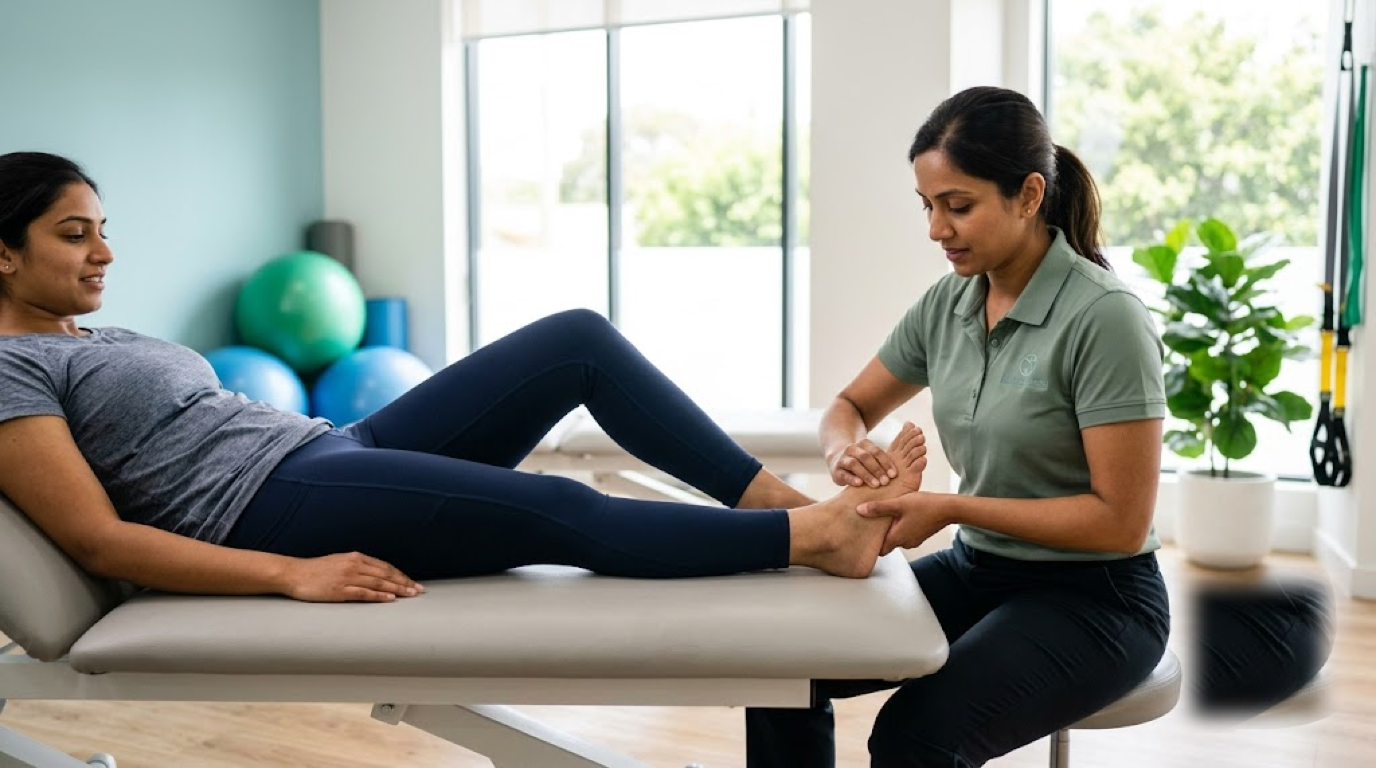
Heel pain with first steps in the morning? Learn how physiotherapy can reduce load, improve strength, and support recovery safely.
Heel pain can make ordinary things feel difficult: getting out of bed, walking to work, standing in the kitchen, or climbing stairs. One common cause is plantar fasciitis, now often called plantar heel pain, where the thick band under the foot becomes irritated and sensitive.
At The RNB Clinic in Ranchi, physiotherapy focuses on understanding why your heel is painful, calming symptoms, and gradually building the foot and calf’s capacity so daily movement feels more manageable.
What plantar fasciitis usually feels like
Plantar fasciitis often causes sharp or aching pain under the heel, especially during the first few steps after waking or after sitting for a while. The pain may ease as you move, then return after prolonged standing or walking.
It is common in people who stand for long hours, suddenly increase walking or running, use unsupportive footwear, or have tight calves. A heel spur on an X-ray may be present, but it is not always the reason for pain.
How physiotherapy assesses heel pain
A physiotherapist will usually ask about your symptoms, work routine, footwear, activity changes, and medical history. They may check foot posture, ankle movement, calf flexibility, strength, walking pattern, and tenderness around the heel.
Not every heel pain is plantar fasciitis. Nerve irritation, stress injury, inflammatory conditions, or referred pain can sometimes look similar, so assessment helps decide the safest starting point.
Physiotherapy treatments that may help
Treatment often includes education on load management, calf and plantar fascia stretching, foot and calf strengthening, taping, footwear advice, and a graded return to walking, sport, or work demands.
Some people benefit from temporary insoles, heel cushions, night splints, or manual therapy. The plan should be adjusted to your pain response rather than pushed aggressively, because irritated tissue usually needs steady progression.
What you can do at home
Avoid long barefoot standing on hard floors if it worsens symptoms. Choose supportive footwear, reduce sudden spikes in walking or running, and break up long standing periods when possible.
Gentle calf stretching and rolling the sole over a bottle or ball may feel soothing for some people. Stop any exercise that causes sharp, increasing, or lingering pain, and ask a clinician if symptoms are not improving.
When to seek medical advice
Get assessed promptly if heel pain follows a fall or sudden injury, if you cannot bear weight, or if there is marked swelling, redness, fever, numbness, tingling, or night pain.
If heel pain has persisted for several weeks despite sensible changes, a physiotherapy review in Ranchi can help identify contributing factors and plan the next steps without promising a quick fix.
Frequently Asked Questions
Take the next step
Ready to Start Your Treatment?
Book a consultation with our expert physiotherapists. No referral needed.
Book AppointmentRelated Articles

Stroke Rehabilitation: Regaining Movement with Physio
Learn how physiotherapy supports safer movement, strength, balance and daily independence after stroke, with realistic goals and steady practice.

Post-Surgery Rehabilitation: What to Expect
Physiotherapy after surgery can support safer movement, strength, confidence, and daily function at each stage of recovery.

Post-surgery rehabilitation: what to expect
A clear guide to physiotherapy after surgery, from first assessment to safe movement, home exercises and steady recovery.