
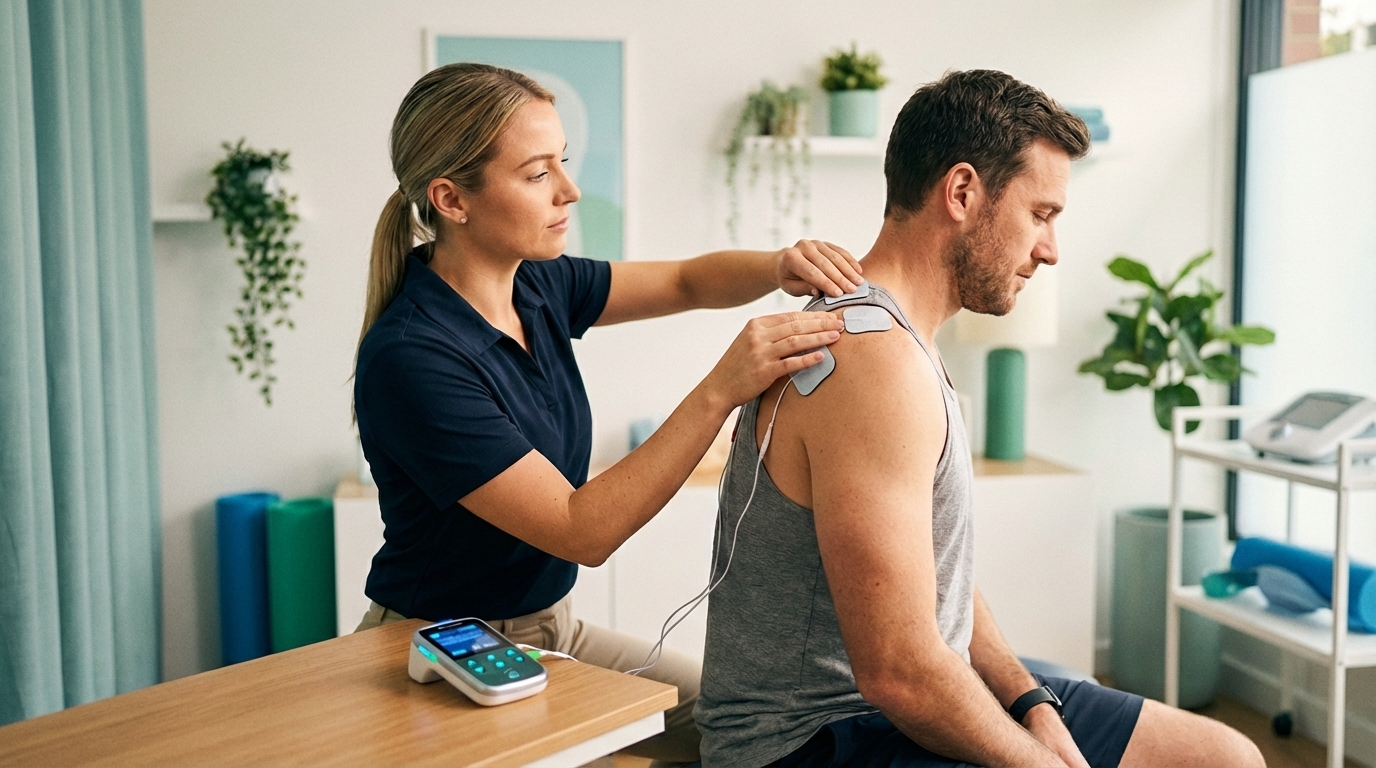
Therapeutic ultrasound uses sound waves to accelerate tissue healing and reduce pain. Learn how it works, what conditions it treats, and its role in modern physiotherapy.
What Is Therapeutic Ultrasound?
Therapeutic ultrasound uses high-frequency sound waves (0.5 - 3 MHz) applied via a transducer probe to penetrate biological tissues, producing both thermal and non-thermal effects that accelerate tissue healing and reduce pain. Unlike diagnostic ultrasound (which creates images), therapeutic ultrasound is designed to treat soft tissue conditions.
How Therapeutic Ultrasound Works
Thermal Effects
Continuous ultrasound at higher intensities generates heat within tissues, particularly at tissue interfaces such as tendon-bone junctions. This thermal effect increases tissue extensibility, improves local circulation, and accelerates the inflammatory-healing process.
Non-Thermal (Mechanical) Effects
Pulsed ultrasound produces acoustic streaming and cavitation, microscale mechanical effects within tissue fluids. These effects increase cell membrane permeability, stimulate fibroblast activity (collagen production), reduce inflammatory mediators, and accelerate the repair of tendons, ligaments, and muscle tissue.
Conditions Treated with Therapeutic Ultrasound
- Tendinopathies. Achilles, patellar, rotator cuff, lateral epicondyle
- Ligament sprains, ankle, knee, wrist
- Muscle strains and myofascial pain
- Frozen shoulder, capsular contracture
- Carpal tunnel syndrome, median nerve
- Plantar fasciitis
- Scar tissue management
- Bursitis and joint inflammation
Ultrasound Parameters in Physiotherapy
The therapeutic effect of ultrasound depends critically on correct parameter selection:
- 1 MHz frequency: penetrates 3 - 5 cm, for deeper structures (hip, knee, shoulder)
- 3 MHz frequency: penetrates 1 - 2 cm, for superficial structures (tendons, ligaments near skin)
- Continuous mode: for thermal effects (heating, extensibility)
- Pulsed mode: for non-thermal effects (healing, acute and post-acute tissue repair)
- Intensity 0.5 - 2.0 W/cm²: adjusted by physiotherapist based on tissue depth and condition
Combining Ultrasound with Other Treatments
Therapeutic ultrasound is most effective as an adjunct to other physiotherapy interventions. For example, ultrasound to a frozen shoulder capsule prior to joint mobilisation makes the tissue more extensible and responsive to stretching. Ultrasound followed by exercise therapy for tendinopathy accelerates tendon collagen remodelling.
Evidence and Current Role
Therapeutic ultrasound has been used in physiotherapy for over sixty years. Its evidence base is positive for tendinopathy, frozen shoulder, and some ligament conditions. It is a valuable tool in the physiotherapy armamentarium, particularly when combined with manual therapy and exercise, producing superior outcomes to either modality alone.
Practical Recovery Roadmap and Self-Management
A strong physiotherapy outcome depends on what happens between sessions as much as what happens inside the clinic. Patients who recover fastest usually follow a clear daily structure: symptom-guided activity, consistent home exercise, deliberate sleep hygiene, hydration, and timely follow-up. This approach keeps tissues moving, reduces fear of movement, and helps the nervous system settle. In practical terms, your plan should be realistic enough to sustain for weeks, not just for two motivated days.
Most conditions improve in phases rather than in a straight line. Early progress may look like better sleep, less morning stiffness, and shorter pain episodes before dramatic pain reduction appears. That is normal and expected. Tracking simple markers, such as pain score, walking tolerance, sitting time, and confidence with daily tasks, gives a clearer picture than pain alone. At The RNB Clinic, we teach patients to look for functional wins because function is the most reliable predictor of durable recovery.
Home Routine That Supports Clinic Treatment
- Complete the prescribed exercise plan at least five days per week with controlled, pain-limited progression
- Use work-break cycles: stand, stretch, and reset posture every 30 to 45 minutes during desk tasks
- Prioritise sleep quality and recovery nutrition to improve tissue repair and reduce pain sensitivity
- Avoid boom-bust patterns where overactivity on good days triggers severe flare-ups on the next day
- Review technique with your physiotherapist regularly so exercises remain accurate and effective
Another critical principle is pacing. Many people either avoid movement completely or push too hard when symptoms dip. Both extremes can delay healing. Pacing means doing the right amount consistently and increasing load in small, planned steps. This is especially important for chronic pain, tendinopathy, and post-surgical rehabilitation where tissue adaptation takes time. When patients combine paced progression with supervision, outcomes are usually better and recurrence rates are lower.
Finally, education is treatment. Understanding why your symptoms behave a certain way reduces anxiety and improves adherence. When you know which discomfort is acceptable and which warning signs need review, you move with confidence instead of fear. That confidence changes behaviour, and behaviour changes outcomes. Physiotherapy works best when manual therapy, exercise, and patient education are integrated into one coherent plan tailored to your goals, work demands, and lifestyle.
If your progress plateaus, that does not mean treatment has failed. It usually means the plan needs recalibration: load adjustment, technique correction, or a different progression strategy. Regular reassessment helps identify these small bottlenecks early. With timely modifications, most patients regain momentum and continue improving in a safe, predictable way while building long-term confidence in movement.
Long-term success also depends on maintenance habits after symptoms improve. Continue a shorter version of your routine two to three times weekly, keep workload progression gradual, and schedule an early review at the first sign of recurring stiffness. This prevention-first strategy reduces relapse risk and protects the gains achieved during rehabilitation.
Frequently Asked Questions
Take the next step
Ready to Start Your Treatment?
Book a consultation with our expert physiotherapists. No referral needed.
Book AppointmentRelated Articles

When Physiotherapy Exercises Feel Too Difficult
Learn what to record when exercises feel too hard, when to stop, and what to discuss with your physiotherapist at your next visit.

Constipation and Pelvic Floor Physio: Your First Visit
Learn what to ask about constipation, pelvic floor assessment, consent and treatment at your first physiotherapy appointment.

Pelvic Organ Prolapse: Your First Physiotherapy Assessment
Learn what to expect, what to bring and how consent guides your first physiotherapy assessment for pelvic organ prolapse.