

Learn what to ask about walking-stick height, grip, safe use and everyday comfort, so your physiotherapist can help you find suitable support.
A walking stick may make moving around feel more manageable when pain, weakness or balance difficulties affect your steps. But choosing one involves more than finding a comfortable handle: the right support depends on how you walk and where you need to go.
At The RNB Clinic in Ranchi, a useful starting point is a conversation about your daily routine. These questions can help you and your physiotherapist choose, adjust and practise using a walking stick.
Is a walking stick the right support for me?
Explain what feels difficult: getting up from a chair, walking outdoors, turning or managing steps. Mention any recent falls, dizziness, changes in balance or instructions to limit weight through a leg. Your physiotherapist can assess whether a stick provides enough support or whether another walking aid would be more suitable.
Ask, “Which type would help with my walking, and why?” A single-point stick and a stick with a wider, multi-foot base behave differently. More feet do not automatically make a stick the best choice; its weight, placement and clearance around your feet also matter.
How should the height and handle fit?
Bring the footwear you normally use for walking. A common starting point is a handle level with the crease of your wrist when you stand upright with your arm relaxed at your side. When you hold it, your elbow should have a slight bend. Your physiotherapist should then check the fit while you walk.
Ask them to watch for a raised shoulder, leaning or reaching too far for the stick. Mention wrist pain, hand arthritis, a weak grip or numbness, because the handle shape and grip size can affect comfort. Before leaving, learn how to check that any height-adjustment button and locking mechanism are secure.
Which hand should I use, and how do I move?
For pain or weakness affecting one leg, a walking stick is usually held in the opposite hand. It generally moves forward with the affected leg, followed by the other leg. Your physiotherapist may adapt this pattern if you have problems with both legs, an arm or your balance.
Ask for a demonstration, then practise while they watch. Include starting, stopping, turning and getting through a doorway. Avoid placing the stick so far ahead that you have to reach for it. If you have been told to keep weight off a leg, ask whether a stick can meet that restriction before relying on it.
What about stairs and outdoor surfaces?
Ask to practise steps with a handrail where available. A commonly taught sequence is to lead with the stronger leg going up, and with the stick and affected leg going down. The exact technique depends on your condition and the rail position, so get a demonstration suited to you before trying stairs alone.
Discuss the surfaces you encounter around Ranchi, such as uneven pavements, entrance steps and wet floors during the monsoon. Check the rubber tip regularly for wear or damage, and replace it when needed. Keep routes at home clear of loose rugs, wires and clutter, and use secure footwear.
When should the fit or support be reviewed?
Arrange a review if using the stick causes new hand, wrist or shoulder discomfort, if you feel less steady, or if you fall or repeatedly nearly fall. Bring the stick along so your physiotherapist can check its condition, height and your walking technique.
Ask, “How will we decide whether I still need this?” Your support needs may change as your condition or activity changes. Reducing use should depend on a reassessment of your walking and balance, rather than a fixed deadline. Sudden new weakness or a sudden major change in balance needs urgent medical assessment.
Frequently Asked Questions
Take the next step
Ready to Start Your Treatment?
Book a consultation with our expert physiotherapists. No referral needed.
Book AppointmentRelated Articles
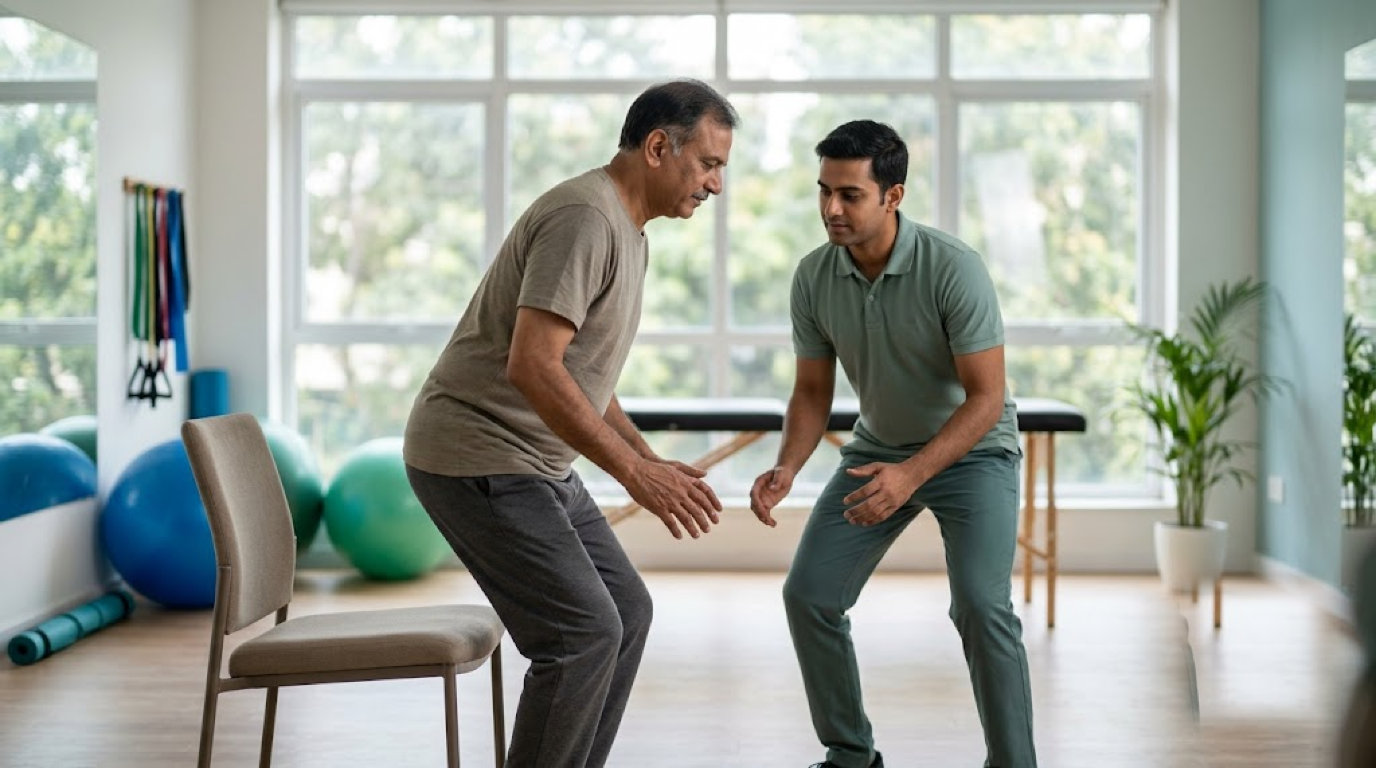
Setting Physio Goals Around Everyday Activities That Matter
From climbing stairs to playing with your children, meaningful physiotherapy goals start with the everyday activities you want to do.
Thumb-Side Wrist Pain When Lifting Your Baby
Sore near the base of your thumb when lifting or feeding your baby? Learn what to discuss at physiotherapy and when to seek medical help.

Tailbone Pain When Sitting: Your Physiotherapy Assessment
Sore when sitting or getting up? Learn what to share at a physiotherapy assessment, what to expect, and when to seek medical help.