
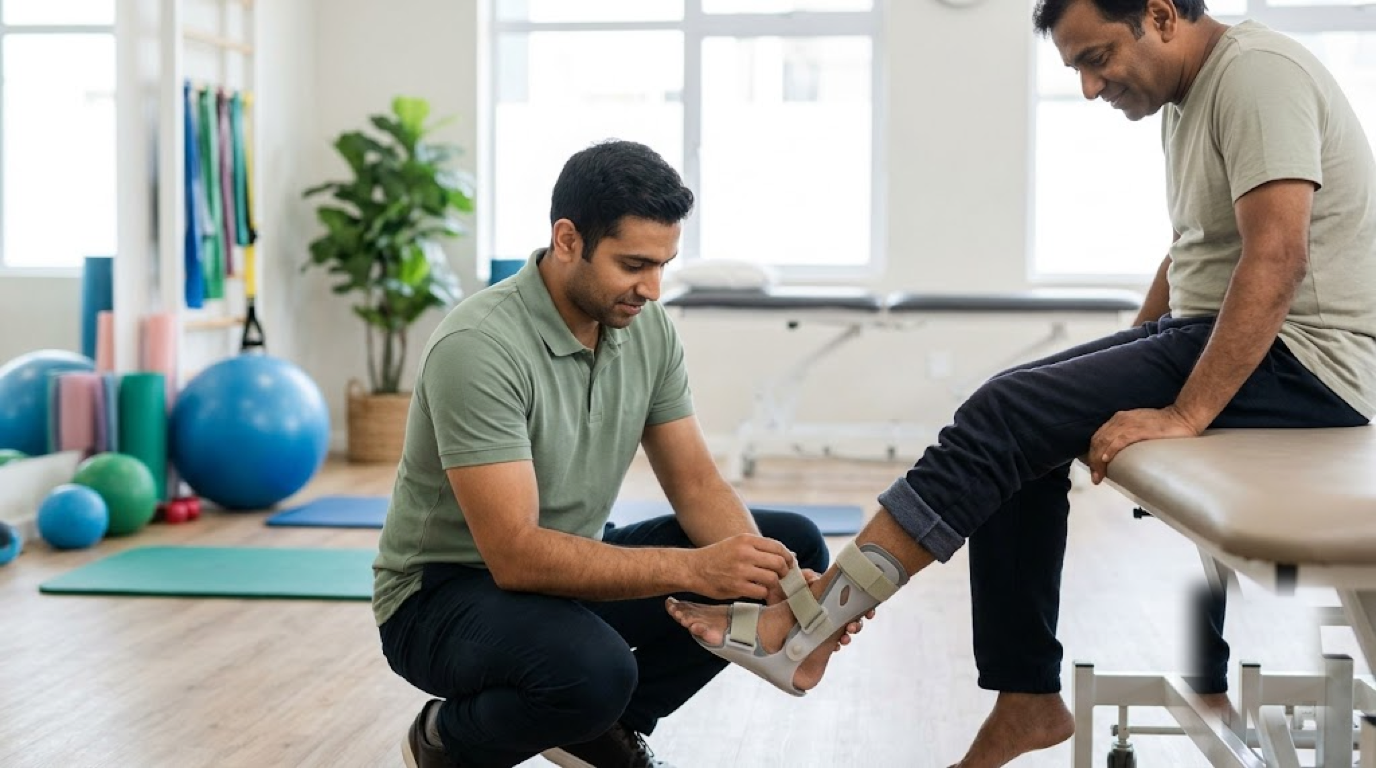
Understand foot drop, discuss safer walking, and learn what to ask your physiotherapist about ankle braces, exercises and everyday comfort.
Does your foot catch on the ground, or do you lift your knee higher to avoid tripping? Foot drop means difficulty lifting the front of the foot. It is a sign of an underlying problem, rather than a diagnosis on its own, and can make everyday walking feel uncertain.
At The RNB Clinic in Ranchi, these questions can help guide a conversation about your walking, assessment and whether an ankle brace might help. The right approach depends on the cause, your strength and sensation, and what you need to do each day.
What could be causing my foot drop?
Ask, “What does my assessment suggest, and do I need to see a doctor?” Foot drop can occur with problems affecting nerves, muscles, the brain or the spinal cord. Your physiotherapist may assess ankle movement, strength, sensation, balance and walking, and ask when the weakness began.
New foot drop needs prompt medical assessment, even if it is painless. Seek emergency care for sudden weakness with facial drooping, arm weakness or speech difficulty. Back pain with new bladder or bowel changes, numbness around the groin, or rapidly worsening leg weakness also needs emergency assessment.
How can I walk more safely right now?
Ask, “What makes me more likely to trip, and would a walking aid help?” Your physiotherapist can observe how your toes clear the ground, how your knee moves and whether you compensate by lifting your hip or knee. Tell them about falls, near misses and fatigue.
Discuss the places you actually walk: stairs at home, uneven lanes, crowded markets or wet surfaces during Ranchi’s monsoon. Practising relevant tasks with supervision, choosing secure footwear and removing loose rugs or clutter may help reduce risk. A stick or walker should be selected and adjusted for your needs.
Would an ankle-foot orthosis help me?
An ankle-foot orthosis, often called an AFO, is a brace that supports the ankle and foot. It may help keep the toes from catching during walking. Ask, “What would this brace help with in my case, and how might it affect my knee, stairs and comfort?” A brace supports movement; it does not treat every underlying cause.
Different designs provide different amounts of support and flexibility. Ask whether you need an off-the-shelf or custom-made option, whether an orthotist should assess the fit, and whether you can try it with your usual footwear. Discuss cost, follow-up adjustments and replacement needs before deciding.
How should I wear and check my brace?
Ask for a demonstration of how to put the brace on, position your heel and fasten the straps. Get an individual wearing-in schedule and advice about socks and shoes. Avoid assuming that a brace will fit safely inside every shoe or work well with loose slippers.
Check your skin after removing the brace, especially if sensation is reduced. Persistent redness, rubbing, blisters, pain or new numbness need attention. Stop using a brace that causes these problems and contact the clinician fitting it; do not reshape or pad it yourself without advice.
Which exercises and follow-up checks do I need?
Ask, “Which movements can I practise safely, and what is each exercise intended to improve?” Your plan may include ankle movement, strengthening where appropriate, balance work and walking practice. Exercise choice depends on the cause and degree of weakness; forcing a movement or exercising to exhaustion is not the goal.
Agree on practical measures of progress, such as fewer toe catches, more comfortable brace use or better walking confidence. Ask when to review the plan and what changes should trigger an earlier appointment. Recovery varies, and some people need ongoing support. Do not stop using a prescribed brace without discussing walking safety.
Frequently Asked Questions
Take the next step
Ready to Start Your Treatment?
Book a consultation with our expert physiotherapists. No referral needed.
Book AppointmentRelated Articles

Physiotherapy with Low Vision: Visits and Home Exercises
Prepare for physiotherapy with low vision, ask for accessible instructions, and learn practical ways to make home exercises easier to follow.

Privacy and Consent During Physiotherapy: What to Ask
Know what to ask about privacy, clothing, touch and consent before a physiotherapy examination, so you can feel informed and comfortable.