
Learn what to practise with your physiotherapist to make getting up from the floor more manageable, and when to stay still and call for help.
Getting down to the floor for prayer, playing with grandchildren or picking something up can be part of everyday life. Getting back up may feel harder when your knees hurt, your legs feel weak or you worry about falling.
At The RNB Clinic in Ranchi, floor-transfer practice can be discussed as part of a physiotherapy assessment. The aim is to find an approach that suits your strength, movement and surroundings, then practise it with appropriate support.
First, separate planned practice from an actual fall
Practising a floor transfer is different from getting up after an unexpected fall. After a fall, pause and check how you feel before moving. Pain, dizziness or an injury may make it unsafe to attempt standing.
If you have severe pain, suspected head, neck, back or hip injury, new weakness, chest pain or difficulty breathing, call for urgent help rather than trying to get up. A head impact also needs prompt medical advice, especially if you take blood-thinning medicine.
If you cannot get up, use a phone or alert device, or call out for assistance. Keep warm and, if you can move comfortably without suspected injury, change position gently while waiting. A family member should not pull you up by your arms.
What your physiotherapist should assess
Tell your physiotherapist what makes floor activities difficult: knee pain, stiffness, weakness, breathlessness, dizziness or fear of falling. Mention recent falls, operations, joint replacements and any instructions about movements or weight-bearing.
Your physiotherapist may check leg and arm strength, balance, joint movement and how comfortably you can kneel or put weight through your hands. Together, you can decide whether floor practice is appropriate and how much assistance you need.
Describe your home setup too. Low seating, loose rugs, slippery tiles and furniture that moves can affect the plan. For homes in Ranchi where floor sitting is part of daily routines, practising a relevant movement can be particularly useful.
Practise a supported sequence, one stage at a time
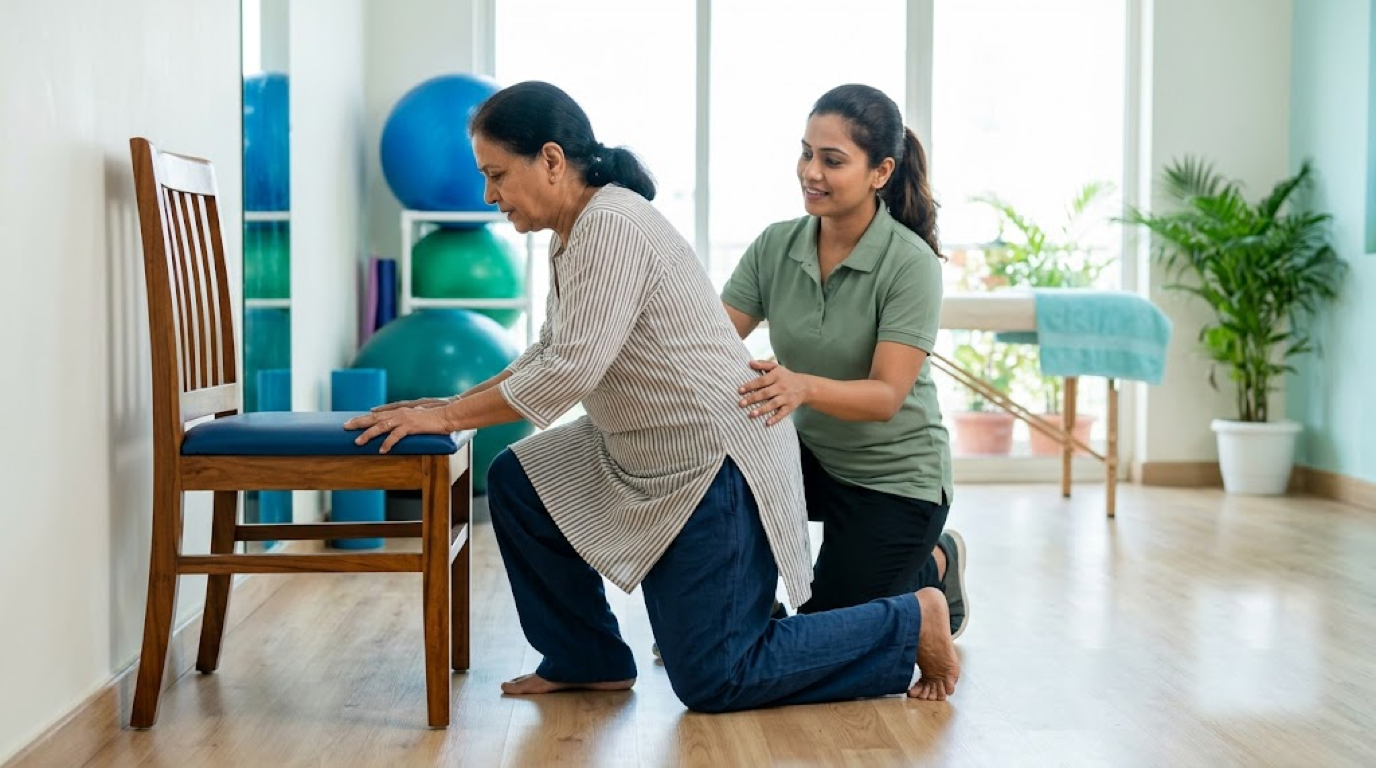
For someone who can kneel comfortably and has been assessed as suitable, one possible route is to roll onto the side, move onto hands and knees, and approach a sturdy support. From supported kneeling, one foot comes forward before the person pushes through their legs and arms to rise and turn towards a seat. This is an example to learn under supervision, not a sequence everyone should attempt alone.
The support must be stable and able to take your weight; wheeled chairs and lightweight tables are unsuitable. Your physiotherapist can guide hand and foot placement, check the support and help you practise lowering yourself in a controlled way.
You do not need to complete the whole movement immediately. Practising rolling, moving into sitting or holding a supported position may be a useful starting point. If kneeling or using your wrists is painful or restricted, ask about another method or suitable equipment rather than forcing the movement.
Build the movements that make the task easier
Depending on your assessment, practice may include rising from a chair, supported stepping, balance exercises and gentle work on ankle, hip or shoulder movement. These activities can develop abilities used during floor transfers; the choice and difficulty should suit you.
Ask your physiotherapist how much to practise and what symptoms mean you should stop. Use short sessions with rests, breathe normally and stop if you develop dizziness, sharp or increasing pain, or feel unwell.
Before practising at home, agree on the exact method, support and supervision you need. Keep the space clear, use secure footwear or another therapist-advised option, and keep a phone within reach. If falls are recurring or unexplained, seek medical assessment alongside physiotherapy.
Frequently Asked Questions
Take the next step
Ready to Start Your Treatment?
Book a consultation with our expert physiotherapists. No referral needed.
Book AppointmentRelated Articles

Setting Physio Goals Around Everyday Activities That Matter
From climbing stairs to playing with your children, meaningful physiotherapy goals start with the everyday activities you want to do.
Thumb-Side Wrist Pain When Lifting Your Baby
Sore near the base of your thumb when lifting or feeding your baby? Learn what to discuss at physiotherapy and when to seek medical help.

Tailbone Pain When Sitting: Your Physiotherapy Assessment
Sore when sitting or getting up? Learn what to share at a physiotherapy assessment, what to expect, and when to seek medical help.