
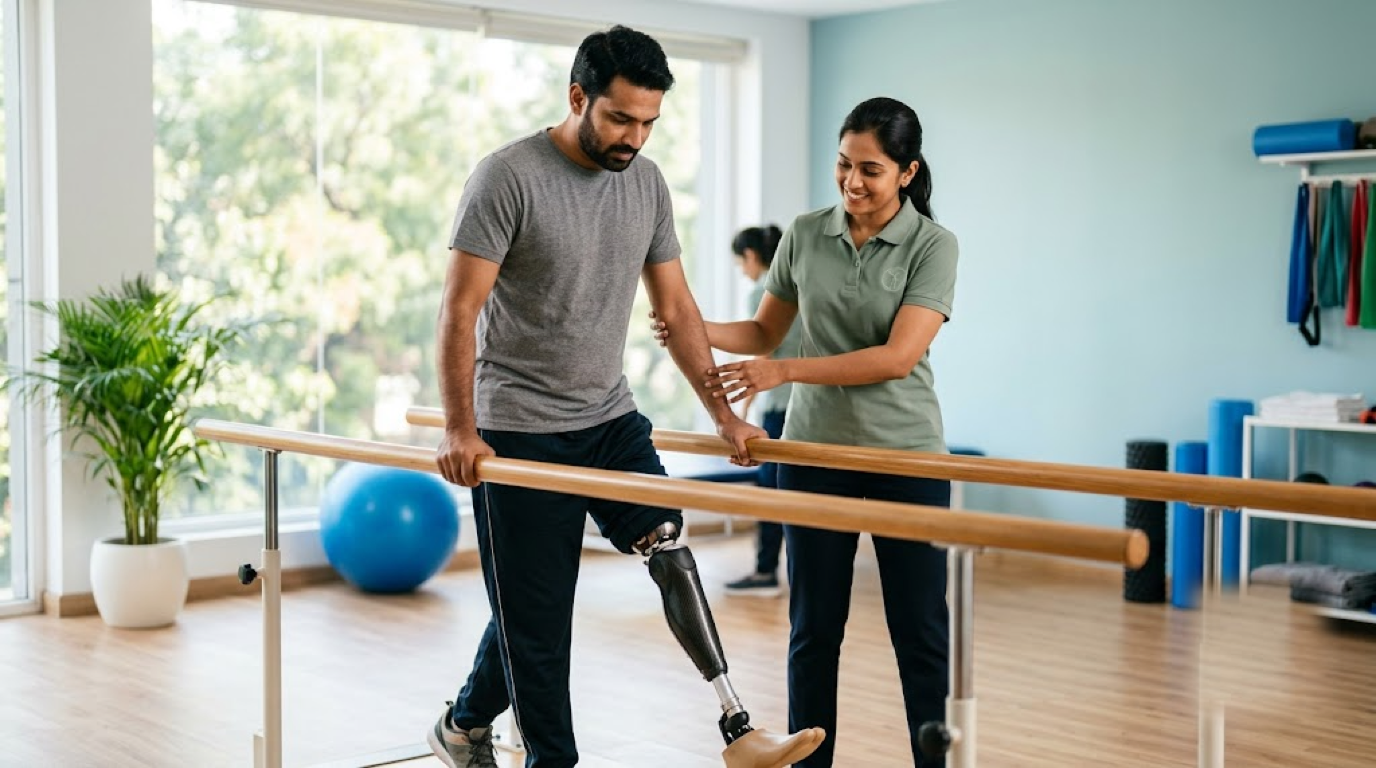
Ask your physiotherapist about balance, walking practice, prosthetic fit and everyday safety as you learn to move with a prosthetic leg.
Learning to walk with a prosthetic leg can bring hope, uncertainty and plenty of questions. You may be wondering how to balance, whether you will need a walking aid, or how you will manage steps outside your home. Rehabilitation should make room for these everyday concerns.
At The RNB Clinic in Ranchi, we encourage you to ask questions and discuss what matters most to you. Your physiotherapist can help you understand movement and walking practice, while your prosthetist—the professional who fits and adjusts your artificial limb—helps address its fit and function.
Am I ready to start, and what should we work towards?
Ask, “What needs to be checked before I begin walking practice?” Your team may assess wound healing, skin condition, swelling, joint movement, strength and balance. Your general health and the level of your amputation also affect how rehabilitation is planned.
Choose goals that reflect your daily life: reaching the bathroom safely, getting into an auto-rickshaw or returning to work. Ask which skills to practise first and how progress will be reviewed. There is no single timetable that suits everyone.
How will you help me learn to balance and walk?
Ask your physiotherapist to explain how you will practise standing, shifting weight and taking steps. Early practice may involve parallel bars or a walking aid, with support matched to your needs. Strengthening and balance exercises may accompany walking practice.
Useful questions include, “Which walking aid should I use?” and “How will we know when I need less support?” Using an aid can help you move safely while developing skills. Practise turning, stopping and sitting down as well as walking straight ahead.
Mention the places you need to navigate around Ranchi, including uneven pavements, slopes and stairs. Ask when and how to practise these situations safely, and whether a family member should learn how to assist you.
What should I do if the prosthesis feels uncomfortable?
Ask what sensations to expect and how to check the skin on your residual limb, sometimes called the stump. Your team should explain when to inspect it, what changes to look for and how to follow your prescribed wearing schedule. A mirror may help you see areas that are difficult to check.
Do not push through pain or keep walking on skin that is blistered or broken. Stop using the prosthesis and contact your rehabilitation team if you notice persistent redness, rubbing or new pain. Ask whom to contact for socket discomfort; adjustments usually need input from your prosthetist.
Tell your team about pain that feels as though it comes from the missing part of the leg, too. Seek prompt medical assessment for an increasingly hot, swollen or red limb, wound discharge or fever. Sudden chest pain or difficulty breathing needs emergency care.
What can I safely practise at home?
Ask for a clear home plan: which exercises to do, how often, what support to use and when to rest. Your physiotherapist should demonstrate the activities and watch you try them. Check which tasks need supervision before attempting them alone.
Discuss loose rugs, wet floors, poor lighting and bathroom access. Ask how to handle a loss of balance and whether practising how to get up after a fall is appropriate for you. Keep your walking aid within reach and use footwear recommended by your team.
Before leaving, ask, “What would mean I should stop and call you?” and “When should we review my progress?” Bring up fatigue, fear of falling or changes in how the prosthesis fits. These details help your team adapt the plan to your needs.
Frequently Asked Questions
Take the next step
Ready to Start Your Treatment?
Book a consultation with our expert physiotherapists. No referral needed.
Book AppointmentRelated Articles

Setting Physio Goals Around Everyday Activities That Matter
From climbing stairs to playing with your children, meaningful physiotherapy goals start with the everyday activities you want to do.

Thumb-Side Wrist Pain When Lifting Your Baby
Sore near the base of your thumb when lifting or feeding your baby? Learn what to discuss at physiotherapy and when to seek medical help.

Tailbone Pain When Sitting: Your Physiotherapy Assessment
Sore when sitting or getting up? Learn what to share at a physiotherapy assessment, what to expect, and when to seek medical help.