
Learn what to bring, what your physiotherapist may check, and which foot changes need medical attention before your appointment.
Numbness, tingling or a padded feeling under your feet can make everyday walking feel uncertain. Diabetes can damage nerves and reduce sensation, but numbness can have other causes too. An assessment helps identify your needs and whether you also need medical review.
If you are preparing for a physiotherapy appointment at The RNB Clinic in Ranchi, a little preparation can help. Your symptoms, daily routine and footwear all provide useful information for planning safe, practical care.
Check whether medical care should come first
Seek urgent medical assessment for a new blister, cut, open sore, discharge, or a foot that becomes red, hot or swollen—even if it does not hurt. Reduced sensation can hide an injury. An unexplained hot, swollen foot can also signal a serious bone or joint problem; avoid putting weight on it while arranging urgent care.
Go to an emergency department if your foot suddenly becomes cold, pale, blue or black, or if a foot wound comes with fever or feeling very unwell. Sudden numbness with new weakness also needs emergency assessment. Do not wait for a routine physiotherapy appointment.
Make a short note of your symptoms
Write down when the numbness started, whether it affects one foot or both, and whether it is constant or comes and goes. Mention burning, pins and needles, pain at night, weakness, back pain, or difficulty noticing the ground beneath your feet.
Include any falls, near-falls, changes in walking distance, or difficulty with stairs. Tell your physiotherapist about previous foot wounds, infections, amputations, or circulation problems. Even a small change matters when sensation is reduced.
Bring your records and everyday footwear
Bring a list of your medicines, recent diabetes reports such as HbA1c if available, and any relevant prescriptions or hospital records. You do not need to arrange new tests just for the appointment unless your clinician asks.
Wear comfortable clothing that allows access to your lower legs and feet. Bring the shoes, sandals, socks and any walking aid you normally use. Footwear that feels comfortable can still rub without you noticing.
Follow your usual meal and medicine routine unless your treating clinician has advised otherwise. If you use insulin or medicines that can cause low blood sugar, bring your usual monitoring supplies and fast-acting glucose. Tell the therapist about recent low blood sugar episodes.
Understand what the assessment may involve
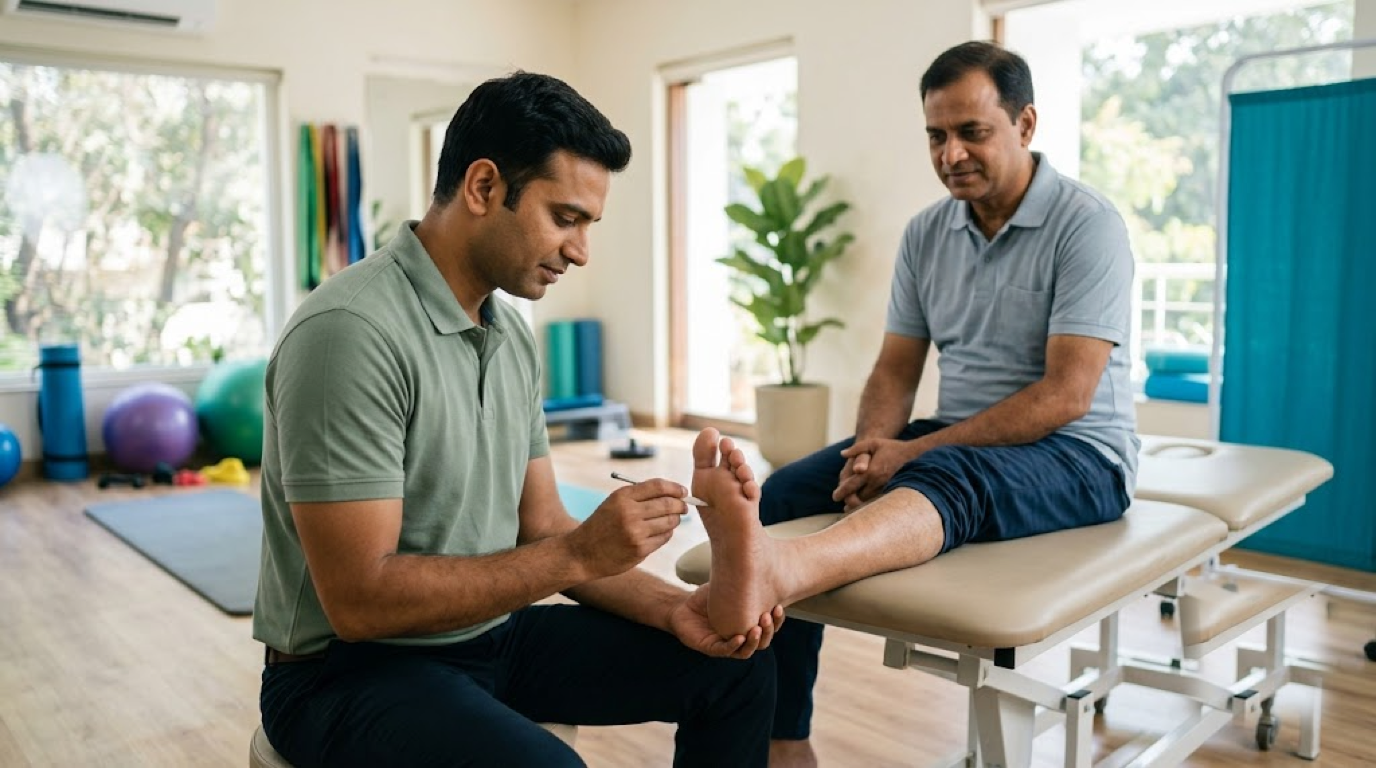
Your physiotherapist may inspect your skin and footwear, check sensation, and assess ankle movement, muscle strength, balance and walking. Sensation testing may involve a soft testing filament or vibration. Tell them if anything feels uncomfortable or if you cannot feel the contact.
They may recommend medical assessment for nerve or circulation concerns, or referral for specialist foot care. Physiotherapy can support strength, balance and safer movement, but it does not replace diabetes management or treatment of a wound.
Any exercise plan should reflect your skin condition, sensation, balance and medical history. Ask which activities are suitable, whether you need support while exercising, and which changes mean you should stop and seek advice.
Protect your feet while you wait
Check the tops, soles and spaces between your toes every day. Use a mirror or ask someone you trust if you cannot see clearly. Wash gently, dry carefully between the toes, and check inside footwear for stones, rough seams or other objects before putting it on.
Avoid walking barefoot, including indoors. Keep hot-water bottles and heating pads away from numb feet, and avoid soaking feet in hot water. Do not cut corns or use chemical corn-removal products yourself.
For everyday journeys around Ranchi, choose well-fitting footwear that protects your feet and does not rub. If you notice a new skin injury or a change in colour, warmth or swelling, seek medical advice promptly instead of trying to exercise through it.
Frequently Asked Questions
Take the next step
Ready to Start Your Treatment?
Book a consultation with our expert physiotherapists. No referral needed.
Book AppointmentRelated Articles

Thumb-Side Wrist Pain When Lifting Your Baby
Sore near the base of your thumb when lifting or feeding your baby? Learn what to discuss at physiotherapy and when to seek medical help.

Tailbone Pain When Sitting: Your Physiotherapy Assessment
Sore when sitting or getting up? Learn what to share at a physiotherapy assessment, what to expect, and when to seek medical help.