Skin tightness after a burn can affect everyday movement. Learn what to ask about exercises, scar care and when to seek medical advice.
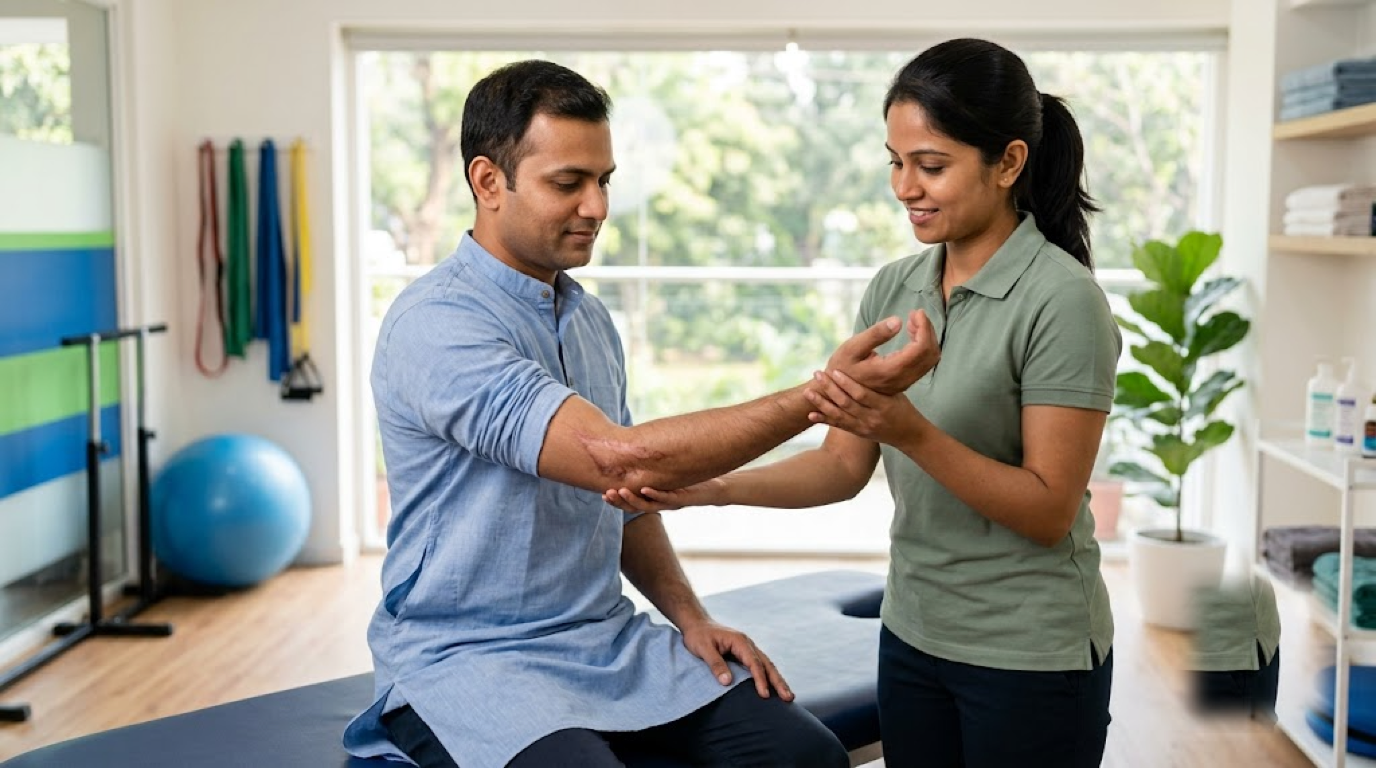
After a burn, skin may feel tight, stiff or uncomfortable when you move. Bending an elbow, lifting an arm or straightening a finger can become difficult. Healing skin, swelling, pain and scars can all contribute, so it helps to understand what is limiting your movement.
For people in Ranchi recovering from a burn, physiotherapy may be one part of care alongside wound treatment and follow-up with the burns or surgical team. At The RNB Clinic, the conversation should start with your healing stage, any treatment restrictions and the everyday activities you want to manage more comfortably.
What is causing the tightness?
Ask: “Is my movement limited by swelling, pain, scar tissue or stiffness in the joint?” These problems can feel similar but may need different approaches. An assessment can check how the skin and nearby joints move, alongside wound healing and sensation.
Scar tissue can shorten as it develops. When this restricts movement, particularly across a joint, it is called a contracture. Increasing difficulty straightening a limb or opening a hand deserves review rather than waiting for it to settle on its own.
When can I move, stretch or return to daily activities?
Ask: “Which movements are safe now, and are there any restrictions because of my wound, dressings or skin graft?” Rehabilitation may begin before a burn is fully healed, but the timing and type of movement must match your treatment plan. After grafting, some areas may need temporary protection from movement.
Ask your physiotherapist to demonstrate each exercise and explain how often to do it, how far to move and what sensations to expect. A gentle pulling feeling may be acceptable with prescribed exercises; sharp pain, bleeding, blistering or skin opening are reasons to stop and contact your treating team.
Bring up practical goals such as dressing, bathing, cooking or returning to work. Short, manageable periods of prescribed movement may help you build activity into the day without forcing the affected area.
Do I need scar massage, silicone, pressure garments or a splint?
Ask: “Is my skin ready for scar treatment, and what is each treatment intended to help?” Massage should only be considered once the skin is fully closed and your treating team says it is suitable. Do not massage open, infected or fragile areas, or a recent graft without clearance.
Moisturisers, silicone products or pressure garments may be considered for particular symptoms or scars. They are not necessary for everyone, and benefits vary. Ask about suitability, skin checks and how to use any recommended product safely.
A splint may sometimes help maintain a position or protect movement. It needs an individual fit and wearing schedule. Ask what to do if it causes rubbing, persistent redness, numbness or increased pain; do not make or tighten a splint yourself.
How will we track progress, and when should I seek help?
Ask: “How will we know the plan is helping?” Useful checks include joint movement, comfort and specific tasks such as reaching a shelf or holding a spoon. Recovery varies with the depth and location of the burn, surgery and other factors. Scar changes can continue for months, so follow-up may be needed.
Seek prompt medical review for spreading redness, increasing warmth or swelling, discharge, an unpleasant smell, fever or worsening pain. New skin breakdown also needs review. Sudden loss of movement or fingers or toes becoming cold, pale or blue needs urgent medical attention.
Tell your therapist if fear of movement, poor sleep or discomfort makes the home plan difficult. Exercises and support may need adjusting. Bring your discharge summary and wound-care or surgical instructions so your physiotherapy plan stays coordinated with your other care.
Frequently Asked Questions
Take the next step
Ready to Start Your Treatment?
Book a consultation with our expert physiotherapists. No referral needed.
Book AppointmentRelated Articles

Setting Physio Goals Around Everyday Activities That Matter
From climbing stairs to playing with your children, meaningful physiotherapy goals start with the everyday activities you want to do.
Thumb-Side Wrist Pain When Lifting Your Baby
Sore near the base of your thumb when lifting or feeding your baby? Learn what to discuss at physiotherapy and when to seek medical help.

Tailbone Pain When Sitting: Your Physiotherapy Assessment
Sore when sitting or getting up? Learn what to share at a physiotherapy assessment, what to expect, and when to seek medical help.