
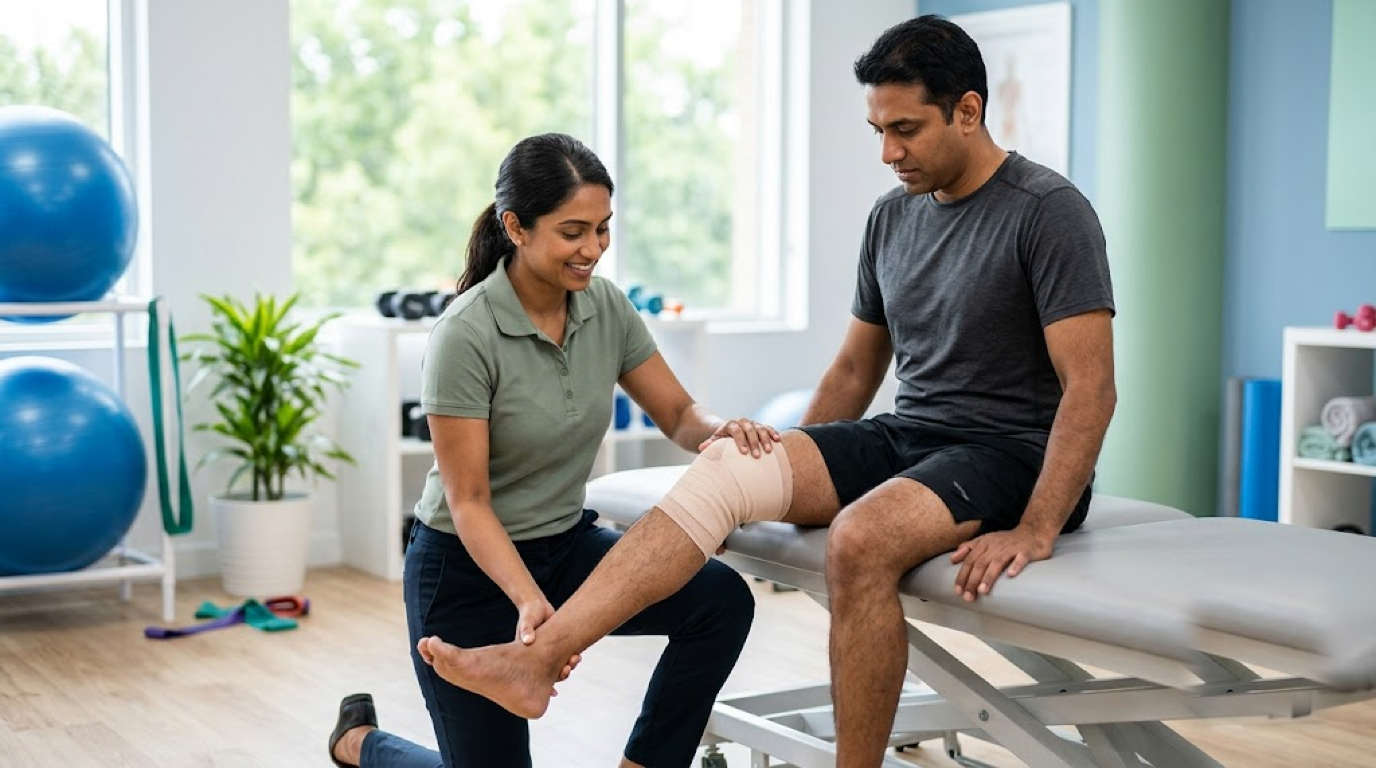
A clear guide to how physiotherapy supports safer movement, strength, and confidence after surgery.
After surgery, it is normal to feel unsure about pain, stiffness, swelling, or how much movement is safe. Physiotherapy helps you rebuild movement step by step, while respecting your surgeon’s instructions and your body’s healing timeline.
At The RNB Clinic in Ranchi, post-surgery rehabilitation is planned around your operation, current symptoms, daily needs, and medical precautions. The aim is steady recovery, not rushing or forcing progress.
Your first physiotherapy visit
Your physiotherapist will usually begin by asking about your surgery, discharge advice, medicines, pain levels, swelling, and any restrictions given by your surgeon. If you have reports or hospital notes, bring them along.
The assessment may include checking posture, walking, joint movement, muscle strength, balance, scar sensitivity, and your ability to do daily tasks such as sitting, standing, climbing stairs, or getting in and out of bed.
You should also be told what to avoid, what is safe to practise at home, and when to contact your surgeon if symptoms do not feel right. Good rehabilitation starts with clear communication.
Early goals: pain, swelling, and safe movement
In the early stage, physiotherapy often focuses on gentle movement, breathing exercises, circulation, swelling control, and safe ways to move without stressing the healing area. The exercises may feel simple, but they are important.
Depending on the surgery, you may practise walking with support, learning how much weight to put through a limb, improving range of motion, or activating muscles that feel weak after rest or pain.
Some discomfort can be expected during recovery, but sharp pain, increasing swelling, fever, wound changes, chest pain, calf pain, or sudden shortness of breath need prompt medical attention.
Building strength and function over time
As healing improves, your programme may progress to strengthening, stretching, balance work, walking training, and task-specific exercises. The pace should be based on your surgery type, tissue healing, pain response, and surgeon’s protocol.
For example, after knee, hip, shoulder, spine, or fracture surgery, the details will differ. A good physiotherapy plan is not a random list of exercises; it is adjusted as your movement and confidence improve.
Your therapist may also help you return to work, household tasks, driving-related movements, sports, or longer walks in a graded way. Progress is usually measured in small improvements over weeks, not overnight changes.
Your role at home
Home exercises are a key part of post-surgery rehabilitation. They should be clear, manageable, and matched to your stage of healing. Doing too little can slow progress, while doing too much can irritate healing tissues.
Try to follow the exact number of repetitions, frequency, and precautions given by your physiotherapist. If an exercise causes unusual pain or swelling that lasts, report it rather than pushing through.
People in and around Ranchi may also need practical advice for stairs, uneven roads, commuting, and home setup. These everyday details matter because recovery happens mostly outside the clinic.
Frequently Asked Questions
Take the next step
Ready to Start Your Treatment?
Book a consultation with our expert physiotherapists. No referral needed.
Book AppointmentRelated Articles

Knee Pain in Adults: Causes and Physiotherapy Care
Understand common causes of adult knee pain and how physiotherapy can help with safer movement, strength and daily function.
Sciatica Pain: How Physiotherapy May Help Avoid Surgery
Learn how physiotherapy can reduce sciatica pain, improve movement, and help many people avoid or delay surgery safely.

Frozen Shoulder: Stages, Exercises and Physio Care
Learn the stages of frozen shoulder, safe exercises, and how physiotherapy can help reduce pain and restore shoulder movement.