Learn how physiotherapy supports safer movement, strength, balance and daily independence after stroke, with realistic goals and steady practice.
A stroke can change movement, balance, strength and confidence very suddenly. For many families, the first weeks after hospital discharge feel confusing: one side may feel weak, walking may be difficult, and simple tasks like sitting up, standing or holding a cup can take effort.
Physiotherapy does not promise a cure, but it can support recovery by helping the brain and body relearn movement in a safe, structured way. At The RNB Clinic in Ranchi, stroke rehabilitation is approached step by step, with goals that match the person's current ability, medical condition and daily needs.
How physiotherapy helps after a stroke
After a stroke, the brain may have trouble sending clear signals to the muscles. This can lead to weakness, stiffness, poor coordination, reduced balance or difficulty walking. Physiotherapy uses repeated, guided movement to help improve control and confidence over time.
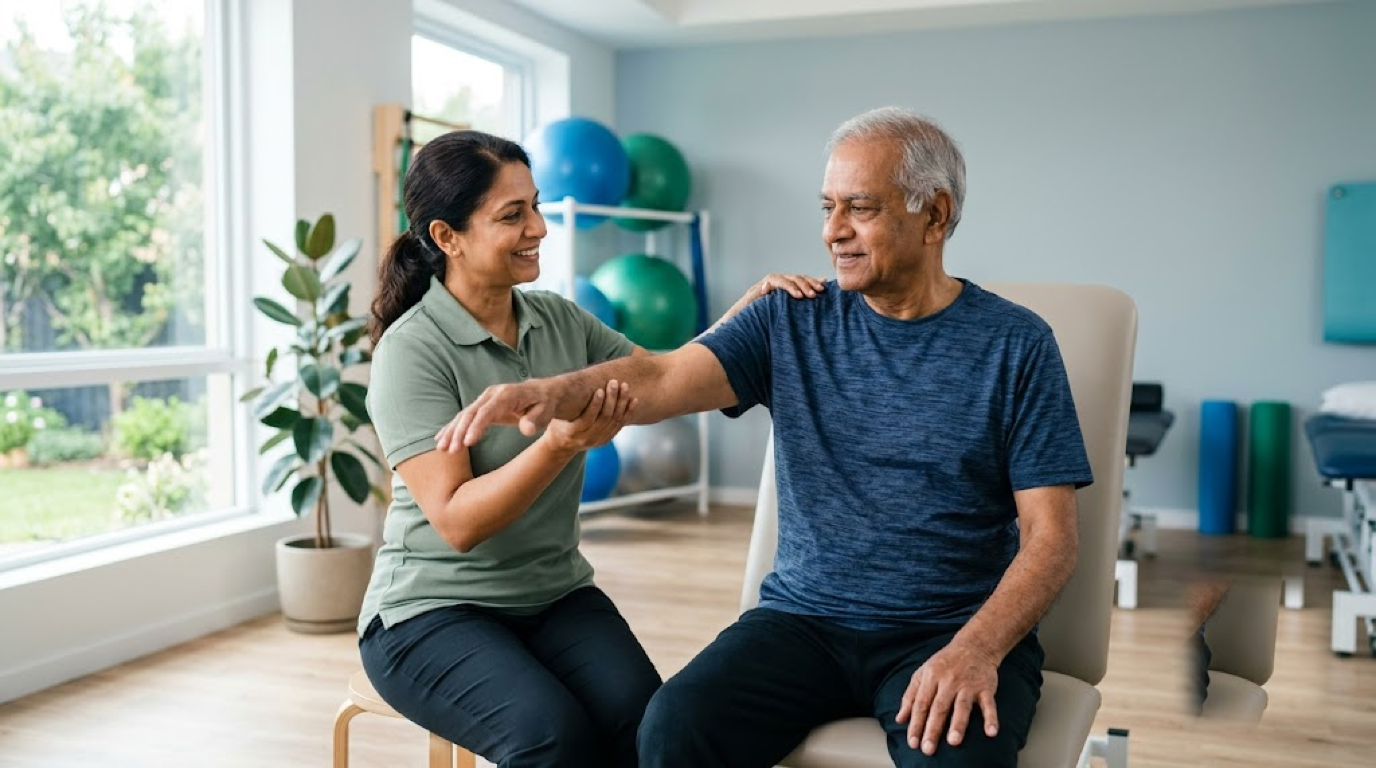
A physiotherapist may work on bed mobility, sitting balance, standing, transfers, walking practice, arm and hand use, stretching, strengthening and posture. The aim is not just exercise, but helping the person move more safely in real-life situations.
Starting early, but safely
Rehabilitation often begins in hospital once the doctor says the person is medically stable. After discharge, continuing therapy can help maintain progress and reduce avoidable complications such as stiffness, falls, shoulder pain or deconditioning.
Every stroke is different. Some people need help learning to sit and stand again, while others may be working on walking speed, stair practice or returning to household tasks. A careful assessment helps decide what is appropriate.
What a therapy session may include
A session may include supported standing, balance exercises, gait training, strengthening, stretching tight muscles, practising safe transfers, and training family members in how to assist without pulling or straining the patient.
If the arm or hand is affected, therapy may include reaching, grasping, weight-bearing through the arm, shoulder care and task practice. Small improvements can matter, such as sitting with better posture, standing with less help or taking a few safer steps.
The role of family and home practice
Recovery after stroke often depends on consistent practice, not only clinic visits. Families can help by encouraging safe exercises, arranging the home to reduce fall risk, and supporting the person without rushing or doing everything for them.
In and around Ranchi, many patients return to homes with stairs, uneven floors or limited space. Physiotherapy can include practical advice for these situations, so exercises and movement plans fit the person's actual environment.
Setting realistic goals
Stroke recovery can take weeks, months or longer, and progress may be uneven. Some people regain a high level of independence, while others continue to need support. Honest goal-setting helps avoid frustration and keeps therapy focused.
Useful goals may include sitting safely, standing from a chair, walking indoors, using the affected hand during daily tasks, reducing stiffness, or improving confidence while moving. The plan should be reviewed regularly as abilities change.
Frequently Asked Questions
Take the next step
Ready to Start Your Treatment?
Book a consultation with our expert physiotherapists. No referral needed.
Book AppointmentRelated Articles

Post-Surgery Rehabilitation: What to Expect
Physiotherapy after surgery can support safer movement, strength, confidence, and daily function at each stage of recovery.

Post-surgery rehabilitation: what to expect
A clear guide to physiotherapy after surgery, from first assessment to safe movement, home exercises and steady recovery.