
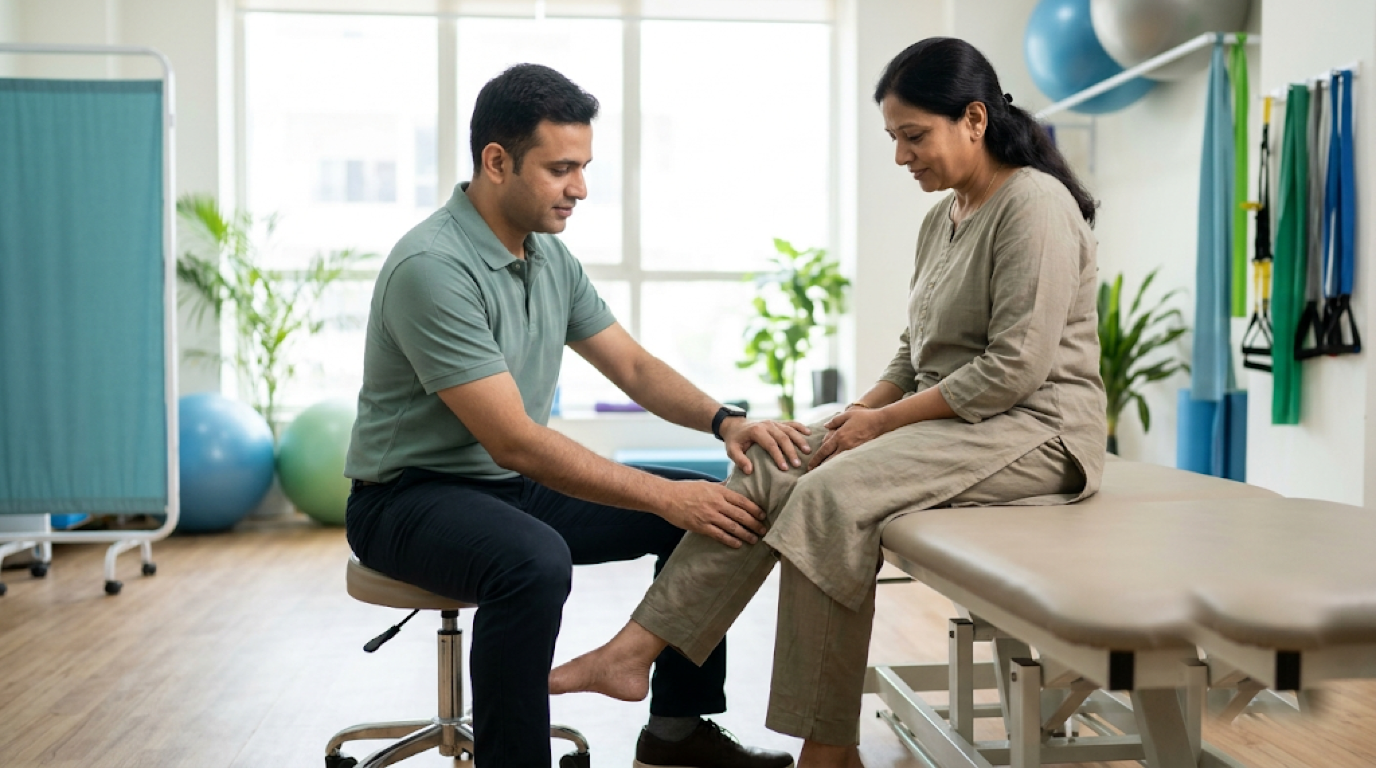
Squatting after an injury or operation can feel uncertain. Learn what to ask your physiotherapist about safety, movement and temporary toilet options.
After an injury or surgery, an everyday task like using a squat toilet can become difficult. Getting down, staying balanced and standing up again may bring pain or worry. If your home in Ranchi has a squat toilet, tell your care team early so they can help you plan.
At The RNB Clinic, we encourage you to ask questions about the activities that matter at home. There is no single timetable for returning to a squat toilet: your injury, operation, healing and any restrictions from your surgeon all matter.
Am I allowed to squat at this stage?
Ask: “Do my current restrictions allow a deep squat?” Some injuries and operations come with limits on joint bending, twisting or how much weight you can put through a leg. Share your discharge instructions with your physiotherapist, especially after hip, knee, ankle or spine surgery.
Ask which restrictions apply to you, who can change them and when they will be reviewed. Being able to walk, or having little pain, does not automatically mean a deep squat is appropriate. If the instructions are unclear, your physiotherapist can help clarify them with your surgical team.
What needs checking before I try?
Using a squat toilet involves more than bending your knees. Your physiotherapist may assess movement at your hips, knees and ankles, leg strength, balance and your ability to lower yourself and rise with control. Tell them about pain, swelling, stiffness, dizziness or a leg that gives way.
Ask: “Can we practise the relevant movements safely here before I try at home?” Any assessment or practice should stay within your restrictions. Do not force a deep squat or use the bathroom as your first test of whether you can manage.
What can I use while squatting is difficult?
Ask whether a stable seated toilet or a suitable bedside commode would help temporarily. The right seat height and support depend on your condition. A raised toilet seat may suit some people, but it is not necessary or appropriate for everyone.
Describe your bathroom layout, including steps, space, wet floors and available support; a photograph can help. Ask about securely fitted grab rails and whether someone should assist you. Avoid relying on towel rails, taps, loose stools or improvised platforms to take your weight.
How should I build confidence and recognise problems?
Ask for a gradual plan tailored to your assessment, including which exercises to do, what discomfort is acceptable and what should make you stop. Supported strengthening and movement practice may be useful when permitted. There is no need to push through sharp pain or force extra bending to meet a deadline.
Stop and seek advice if practice causes new or increasing pain, swelling, instability or wound concerns. After surgery, new calf pain or swelling needs urgent medical assessment; chest pain or sudden breathlessness needs emergency care. Before leaving your appointment, ask whom to contact if symptoms change.
Frequently Asked Questions
Take the next step
Ready to Start Your Treatment?
Book a consultation with our expert physiotherapists. No referral needed.
Book AppointmentRelated Articles
Getting Out of Bed After a Caesarean: Questions to Ask
Ask your physiotherapist how to get out of bed comfortably after a caesarean, manage strain and recognise symptoms that need medical attention.

Long COVID: Discussing Fatigue and Activity Limits
Prepare for a physiotherapy discussion about Long COVID fatigue, delayed symptom flare-ups and activity limits, with practical questions to bring.