
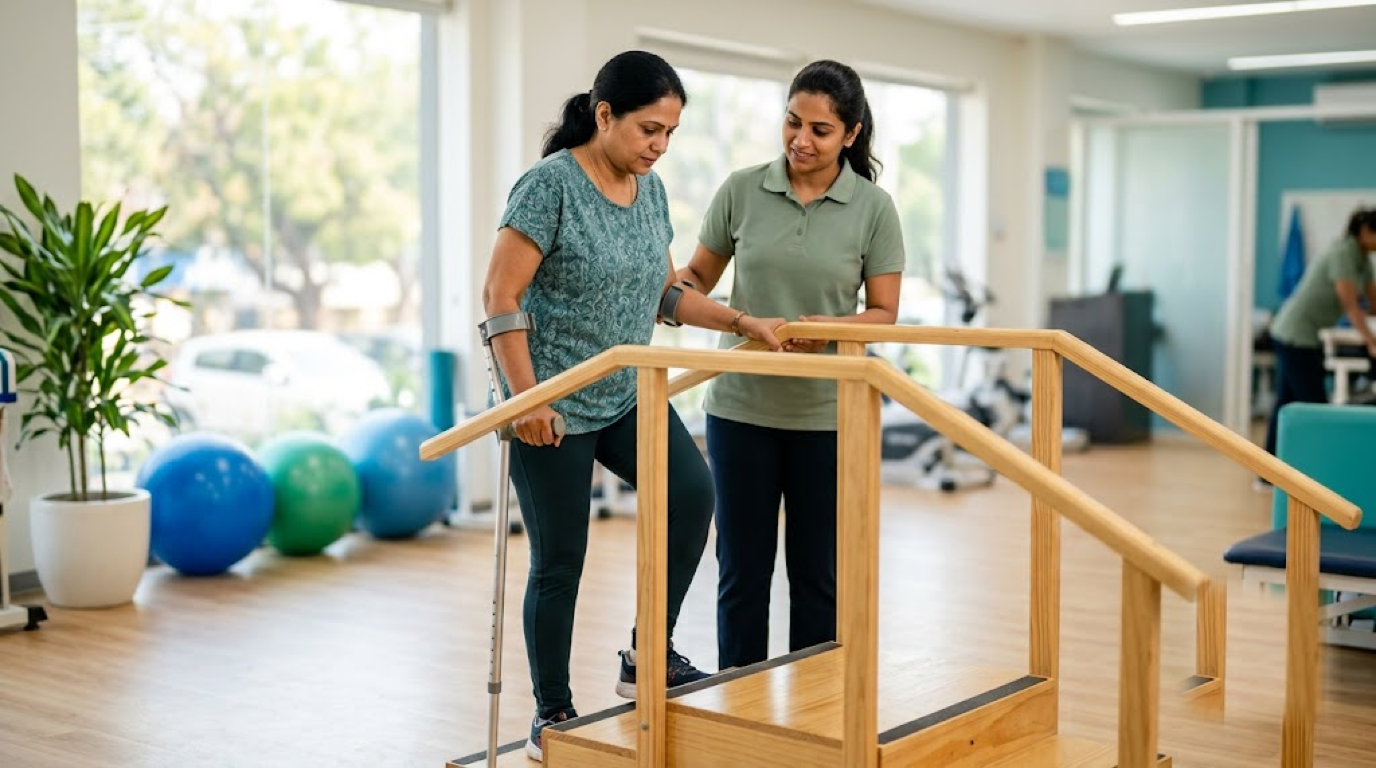
Learn what to practise with your physiotherapist before using crutches on stairs, from weight-bearing rules to handrails and safe support.
Stairs can feel intimidating when you are using crutches after an injury or operation. The aim of practice is to find a method that suits your strength, balance, staircase and the amount of weight you are allowed to put through your affected leg.
At The RNB Clinic in Ranchi, stair practice is something to discuss as part of your rehabilitation. This guide explains what to rehearse with your physiotherapist; it is not a substitute for a supervised demonstration.
Start with your weight-bearing instructions
Before trying stairs, confirm the instructions from your treating team. Non-weight-bearing means keeping weight off the affected leg. Partial weight-bearing allows only the amount prescribed, while weight-bearing as tolerated allows loading within the limits your clinician has explained. These instructions determine your stair technique.
Tell your physiotherapist about pain, dizziness, problems with your other leg, or weakness in your hands and shoulders. Ask them to check your crutch height, handgrips and rubber tips. If you cannot recall your restrictions, clarify them before practising.
Practise a sequence that matches your restrictions
A common reminder is “unaffected leg up first; crutch and affected leg down first”. However, this reminder is incomplete: the exact sequence depends on whether you may load the affected leg and whether you have a secure handrail. Ask your physiotherapist to demonstrate your particular method.
If you must remain non-weight-bearing, your affected foot needs to stay clear of the steps throughout the movement. This requires strength and balance, so do not work out a hopping technique alone. Begin on a low practice step with supervision and progress only when your physiotherapist considers it appropriate.
Rehearse both climbing and descending, including placing the crutch tip securely on each tread, clearing the edge of the step and pausing to regain balance. Going down may feel harder, so allow time to practise it separately.
Rehearse handrails, landings and help from another person
A secure handrail can provide useful support. Practise with a rail on the same side as the one you use at home, where possible. Ask your physiotherapist to show you how to manage the spare crutch without losing your grip or leaving it where it could trip you.
Practise approaching the staircase, turning on the landing and moving away from the final step. If a family member will help, bring them to a session so they can learn where to stand and how to assist without pulling on your arms or crutches.
If your stairs have no rail, are unusually narrow, or include awkward turns, describe them or bring photographs. A different approach or temporary arrangement on one floor may be needed. Sitting to move along stairs also needs assessment because getting down and standing up again can be difficult.
Prepare your home and know when to stop
Keep steps well lit, dry and clear of rugs, footwear and loose objects. Wear secure, supportive footwear suitable for your treatment restrictions. In Ranchi’s rainy weather, check for wet stair treads and dry your crutch tips before use.
Keep your hands available for the rail and crutches; ask someone else to carry items. Plan trips so you are not repeatedly using stairs when tired or rushing to answer the door.
Stop practice if you feel faint, develop new or increasing pain, cannot maintain your weight-bearing restriction, or repeatedly catch a foot or crutch on the step. Tell your physiotherapist what happened. Before practising at home, agree on whether you need someone present and what to do if you feel unsafe.
Frequently Asked Questions
Take the next step
Ready to Start Your Treatment?
Book a consultation with our expert physiotherapists. No referral needed.
Book AppointmentRelated Articles

Setting Physio Goals Around Everyday Activities That Matter
From climbing stairs to playing with your children, meaningful physiotherapy goals start with the everyday activities you want to do.
Thumb-Side Wrist Pain When Lifting Your Baby
Sore near the base of your thumb when lifting or feeding your baby? Learn what to discuss at physiotherapy and when to seek medical help.

Tailbone Pain When Sitting: Your Physiotherapy Assessment
Sore when sitting or getting up? Learn what to share at a physiotherapy assessment, what to expect, and when to seek medical help.