
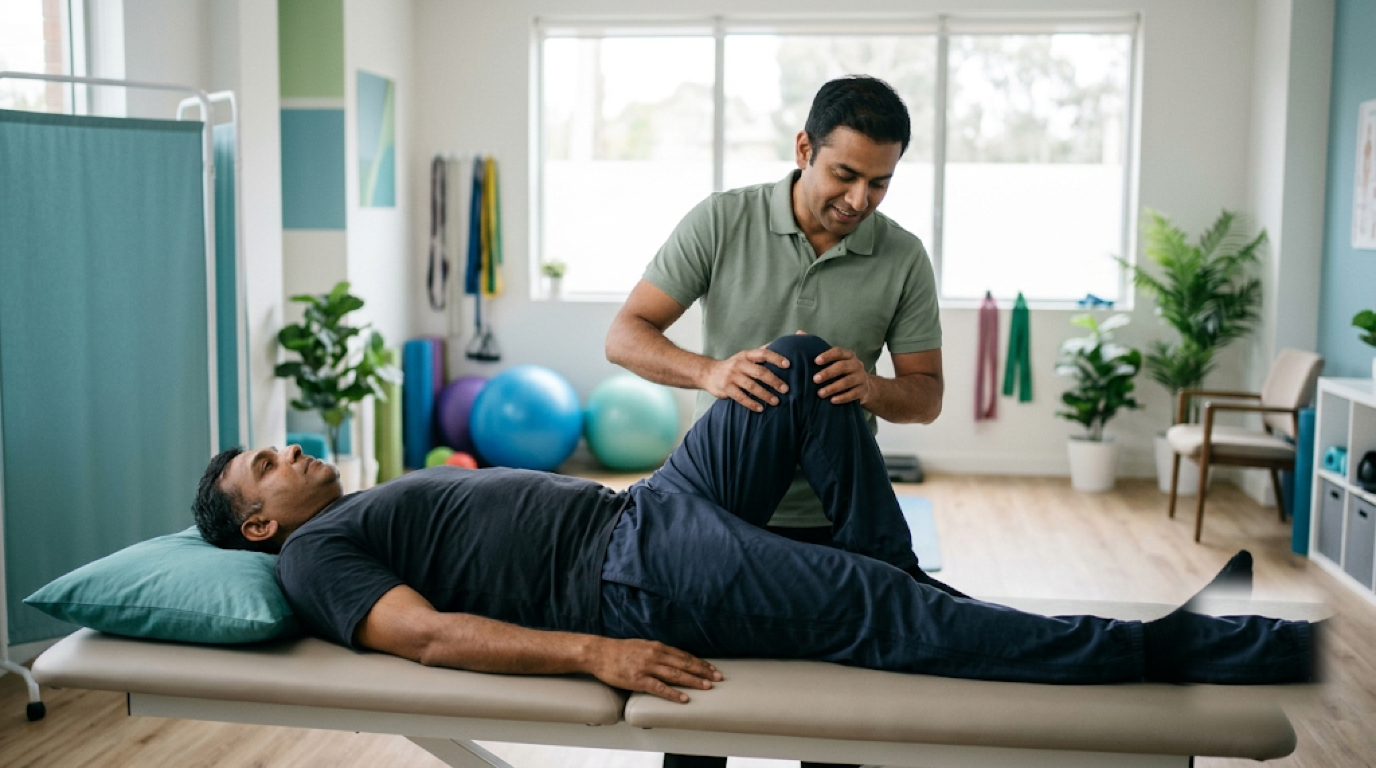
Groin pain during car transfers can have several causes. Learn what to tell your physiotherapist, what assessment may involve and when to seek medical help.
A sharp pinch or deep ache in your groin when getting into a car can make an everyday journey uncomfortable. Lifting your leg, bending your hip and turning into the seat combine several movements, so this symptom alone does not tell us what is causing the pain.
At The RNB Clinic in Ranchi, a useful starting point is a conversation about exactly what you feel and which movements bring it on. These details help your physiotherapist assess the problem and discuss appropriate next steps.
What might be contributing to the pain?
Groin pain can come from the hip joint or nearby muscles and tendons, including the inner-thigh muscles and hip flexors. Sometimes pain is referred from another area, such as the lower back. Several conditions can feel similar, so a painful car transfer is not enough to identify the cause.
Groin symptoms can also have causes that need medical assessment, such as a hernia. Tell your physiotherapist about any lump, abdominal discomfort, urinary symptoms or testicular pain rather than assuming the problem is a muscle strain.
Details worth sharing at your appointment
Describe where the pain is, when it started and whether there was an injury or change in activity. Explain whether lifting your leg, turning, lowering into the seat or standing back up is the difficult part. Mention whether one side is affected and how long discomfort lasts afterwards.
Share any catching, locking, giving way, stiffness or painful clicking. Your physiotherapist will also want to know about pain during walking, stairs, dressing or sleep, along with previous hip or back problems. Describe your car’s seat height and available legroom if these seem to make a difference.
What assessment and a management plan may involve
Your physiotherapist may observe your walking, check hip movement and assess strength around the hip and thigh. They may also examine your back or nearby areas when relevant. Ask them to explain what the findings suggest, what remains uncertain and whether a medical review is needed.
Depending on the assessment, a plan may include adjusting activities and gradually building strength and movement tolerance. Ask which exercises suit you, how much discomfort is acceptable and when progress should be reviewed. Scans are not always needed; ask whether imaging would change your care.
Making car transfers easier—and knowing when to seek help
If comfortable, try sitting down first, then turning your body and legs together into the car. Reverse the movement to get out, avoiding a twist through a planted foot. Allow enough space and use a stable handhold. Adjust the seat while parked, keeping safe access to the pedals and seat belt. Stop if the movement causes sharp or increasing pain.
Seek urgent medical care after an injury if you cannot bear weight, or if hip pain comes with fever and a hot or swollen joint. Sudden severe testicular pain, or a painful groin lump with vomiting, also needs emergency assessment. Persistent or worsening pain, unexplained weight loss or ongoing night pain warrants prompt medical review. For everyday symptoms affecting travel around Ranchi, arrange an assessment rather than repeatedly forcing the painful movement.
Frequently Asked Questions
Take the next step
Ready to Start Your Treatment?
Book a consultation with our expert physiotherapists. No referral needed.
Book AppointmentRelated Articles

Getting Out of Bed After a Caesarean: Questions to Ask
Ask your physiotherapist how to get out of bed comfortably after a caesarean, manage strain and recognise symptoms that need medical attention.

Long COVID: Discussing Fatigue and Activity Limits
Prepare for a physiotherapy discussion about Long COVID fatigue, delayed symptom flare-ups and activity limits, with practical questions to bring.
Using a Squat Toilet After Injury or Surgery
Squatting after an injury or operation can feel uncertain. Learn what to ask your physiotherapist about safety, movement and temporary toilet options.