

Learn what to bring, what your physiotherapist may check, and how to discuss safe preparation before hip replacement.
If you are preparing for a hip replacement, you may be wondering how much to move, which exercises are suitable, or how you will manage at home afterwards. A physiotherapy assessment gives you time to discuss these concerns and plan around your needs.
For people in and around Ranchi, The RNB Clinic’s approach to this conversation starts with understanding everyday difficulties and your surgical team’s advice. You do not need to be fit or flexible before attending: the assessment helps establish your starting point.
What is physiotherapy before hip replacement?
Physiotherapy before surgery, sometimes called prehabilitation, focuses on preparing for the demands of recovery. It may include suitable exercises, advice on managing activity, and practice with movements such as getting up from a chair.
The aim is to support strength, mobility and confidence where possible. Results vary, and preoperative exercise cannot guarantee an easier recovery or remove the need for surgery. Your plan should reflect your symptoms, other health conditions and your surgeon’s instructions.
What to bring to your assessment
Bring your referral, any available surgeon’s notes, relevant scan reports and a list of medicines. If you have a surgery date or written instructions from the hospital, bring those too. You do not need to arrange new scans just for physiotherapy unless your treating team requests them.
Wear comfortable clothing that allows you to move and lets the physiotherapist assess your hip and knee. Bring your usual walking stick or walker, if you use one, and wear secure footwear.
Write down your main concerns and a few activities you find difficult, such as climbing stairs, dressing or walking to nearby shops. Mention your home setup, including steps, bathroom arrangements and who could help after surgery.
What your physiotherapist may check
The appointment usually begins with questions about pain, stiffness, sleep, falls and how far you can walk comfortably. Tell your physiotherapist about previous operations, other painful joints and conditions that affect exercise, such as heart or breathing problems.
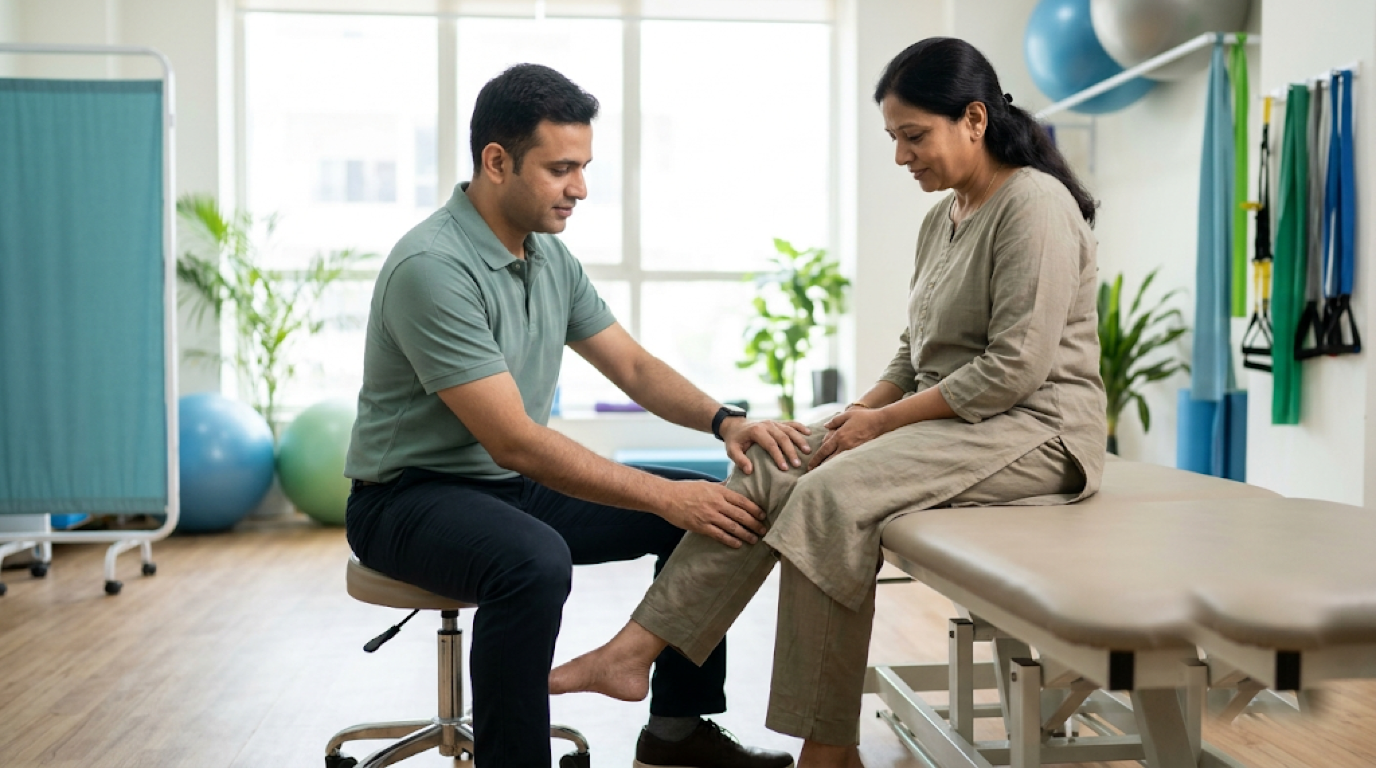
With your consent, they may assess walking, balance, muscle strength and comfortable hip movement. They may also observe how you stand from a chair or manage a step. These checks should be adapted to your ability, with rest breaks when needed.
You do not need to push through sharp pain to complete the assessment. Say if a movement hurts, makes you feel unsteady or worries you. You can ask for a movement to be changed or stopped.
How to prepare safely before the appointment
Continue familiar, manageable activity within any restrictions your surgical team has given you. Avoid suddenly starting strenuous exercise or forcing hip stretches to prepare for the assessment. The appointment is an opportunity to find an appropriate level of activity.
Keep a brief note of what brings on symptoms, what helps and how long any increase in pain lasts. This can help your physiotherapist choose exercises and discuss how to balance movement with rest.
If you develop sudden severe hip pain or cannot put weight through the leg, seek prompt medical assessment rather than waiting for physiotherapy. New chest pain or severe breathlessness needs emergency medical attention.
Leave with a plan you understand
Ask which exercises are suitable, how often to do them and what symptoms mean you should reduce or stop an activity. A manageable plan may include strengthening, gentle movement and walking, depending on your assessment.
Discuss practical preparation too: using a walking aid, arranging help at home and travelling to follow-up appointments in Ranchi. Advice about movement restrictions after surgery should come from your surgical team because recommendations can differ.
Before leaving, check that you understand the exercises and know whom to contact if symptoms change. Let your physiotherapist know about any changes to your surgery date or medical advice so the plan can be reviewed.
Frequently Asked Questions
Take the next step
Ready to Start Your Treatment?
Book a consultation with our expert physiotherapists. No referral needed.
Book AppointmentRelated Articles

Getting Out of Bed After a Caesarean: Questions to Ask
Ask your physiotherapist how to get out of bed comfortably after a caesarean, manage strain and recognise symptoms that need medical attention.

Long COVID: Discussing Fatigue and Activity Limits
Prepare for a physiotherapy discussion about Long COVID fatigue, delayed symptom flare-ups and activity limits, with practical questions to bring.
Using a Squat Toilet After Injury or Surgery
Squatting after an injury or operation can feel uncertain. Learn what to ask your physiotherapist about safety, movement and temporary toilet options.