

Gentle physiotherapy can help older adults improve strength, balance, confidence, and safer movement in daily life.
Ageing can bring changes in strength, balance, joint movement, vision, and confidence. For many older adults, this can make simple activities like getting up from a chair, using stairs, walking to the market, or bathing feel less steady than before.
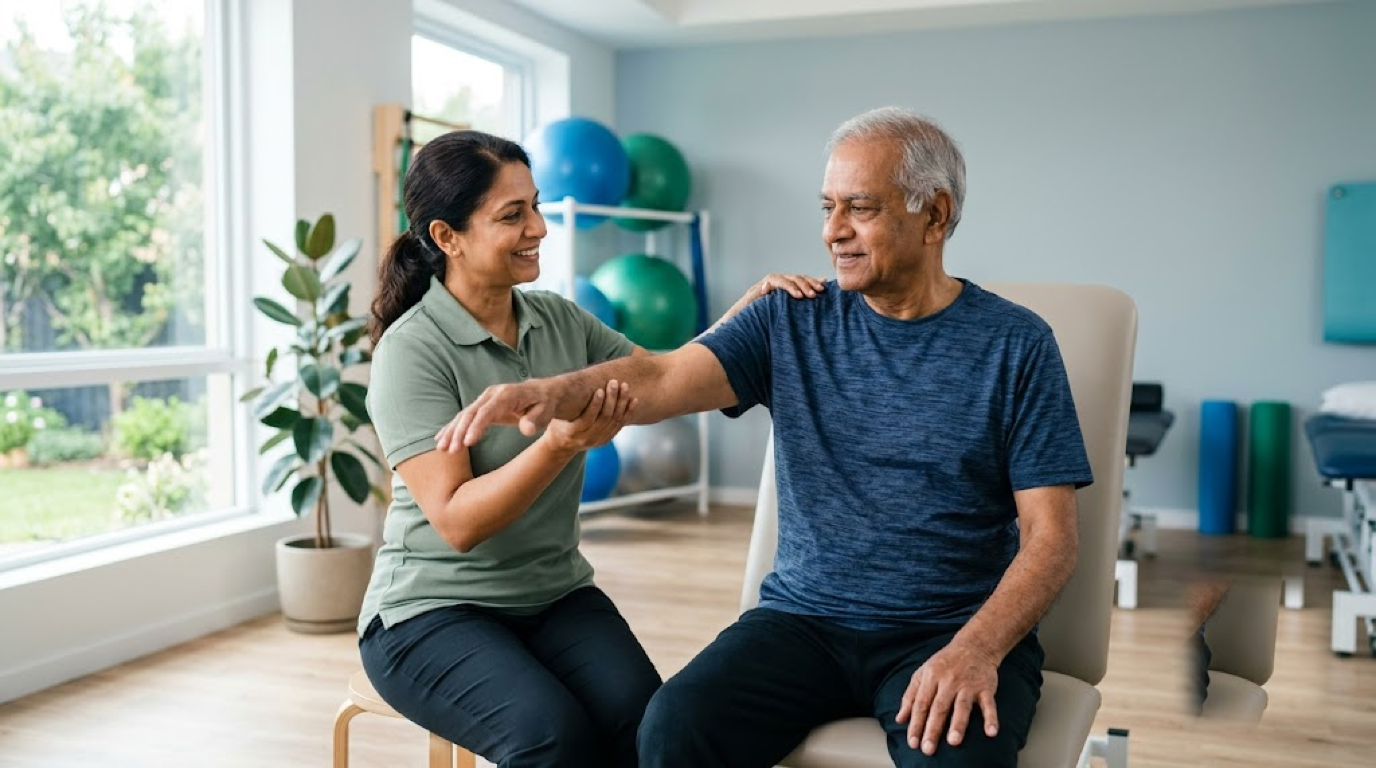
Physiotherapy for elderly people focuses on practical, evidence-informed ways to stay mobile and reduce fall risk. At The RNB Clinic in Ranchi, the aim is not to push hard, but to build safer movement step by step, based on each person’s health, comfort, and daily needs.
Why falls become more common with age
Falls are rarely caused by one thing alone. Weak leg muscles, stiff joints, poor balance, dizziness, reduced vision, certain medicines, foot problems, and unsafe home spaces can all add up.
A physiotherapist looks at how a person walks, stands, turns, gets up from a chair, and manages steps. This helps identify movement-related risks that may be improved with the right exercises and guidance.
Family members often notice small signs first: holding walls while walking, avoiding stairs, slower walking, or fear after a previous fall. These signs are worth addressing early.
How physiotherapy supports safer movement
Physiotherapy may include balance training, leg strengthening, flexibility work, walking practice, posture correction, and training for everyday tasks such as sitting, standing, climbing steps, and turning safely.
Exercises are usually gentle and progressive. The goal is to improve control and confidence without overloading painful joints or ignoring medical conditions such as arthritis, diabetes, stroke, Parkinson’s disease, or osteoporosis.
For many elderly people, regular practice matters more than intensity. A few well-chosen exercises done consistently can support independence better than occasional heavy workouts.
What a fall-prevention assessment may include
A physiotherapist may check leg strength, balance in different standing positions, walking speed, use of a stick or walker, pain, joint range, footwear, and confidence during movement.
They may also ask about previous falls, dizziness, medicines, vision checks, bathroom safety, lighting, loose rugs, and stairs at home. Some issues may need referral back to a doctor for medical review.
In and around Ranchi, many homes have steps, uneven outdoor surfaces, or slippery bathroom floors. Small changes, combined with guided exercise, can make daily movement safer.
Simple safety habits that can help at home
Keep walking areas well lit, remove loose mats, use non-slip bathroom footwear, install grab bars where needed, and avoid rushing to answer the door or phone.
Older adults should stand up slowly after lying or sitting, especially if they feel light-headed. Supportive footwear, regular eye checks, and discussing dizziness or sleepiness from medicines with a doctor can also help.
If a walking stick or walker is used, it should be the right height and used correctly. A physiotherapist can teach safe technique so the aid supports balance instead of creating new strain.
Frequently Asked Questions
Take the next step
Ready to Start Your Treatment?
Book a consultation with our expert physiotherapists. No referral needed.
Book AppointmentRelated Articles
Stroke Rehabilitation: Regaining Movement with Physio
Learn how physiotherapy supports safer movement, strength, balance and daily independence after stroke, with realistic goals and steady practice.

Post-Surgery Rehabilitation: What to Expect
Physiotherapy after surgery can support safer movement, strength, confidence, and daily function at each stage of recovery.