

Unsure when to walk after an ankle sprain? Learn what to ask about pain, swelling, support and returning to everyday routes with confidence.
After an ankle sprain, everyday walking can feel surprisingly uncertain. Is a limp okay? Should you rest longer? What if your ankle swells after a short trip outside? Returning to familiar routes in Ranchi may involve uneven pavements, stairs and busy roads, so your plan should fit your actual day.
At The RNB Clinic, we encourage you to ask questions about your assessment and recovery plan. The aim is to build comfortable, confident walking at a pace suited to your injury, rather than follow a fixed deadline.
Is my ankle ready for walking, or do I need another assessment?
Ask your physiotherapist what the examination suggests and whether you need a medical review or an X-ray. Not every twisted ankle is a straightforward sprain. Where you feel pain, how the injury happened and whether you can bear weight all help guide the next step.
Seek prompt medical assessment if you cannot take a few steps, have marked pain over the ankle or foot bones, or have severe or worsening pain and swelling. An ankle that looks deformed, an open wound, or a foot that becomes cold, pale or numb needs urgent medical attention.
How much walking should I do, and what pain is acceptable?
For many uncomplicated ankle sprains, gradually putting weight through the foot and restoring movement are part of recovery. However, the right starting point depends on your assessment. Ask whether you should begin with short indoor walks, use support or temporarily limit weight-bearing.
Ask for a clear way to judge your response: how much discomfort is acceptable, whether you are limping, and how the ankle feels later that day and the next morning. Increasing pain, more swelling or a worsening limp can mean the walking load needs adjusting.
Start with a manageable distance on a level surface and build up gradually as advised. Increase one demand at a time, such as distance before speed or uneven ground. Avoid pushing through sharp pain just to reach a step target.
Would a brace, walking aid or different shoes help?
A brace, taping or walking aid may help some people walk more comfortably during recovery. Ask whether you need one, how it should fit and when to reduce its use. If crutches are recommended, have your physiotherapist demonstrate their height and walking pattern.
Bring the shoes you normally wear to your appointment. Ask whether they offer a secure fit and suitable grip, especially for wet paths or uneven surfaces. Comfortable footwear and a simpler route can make early outings easier to manage.
Which exercises will help me return to my usual routes?
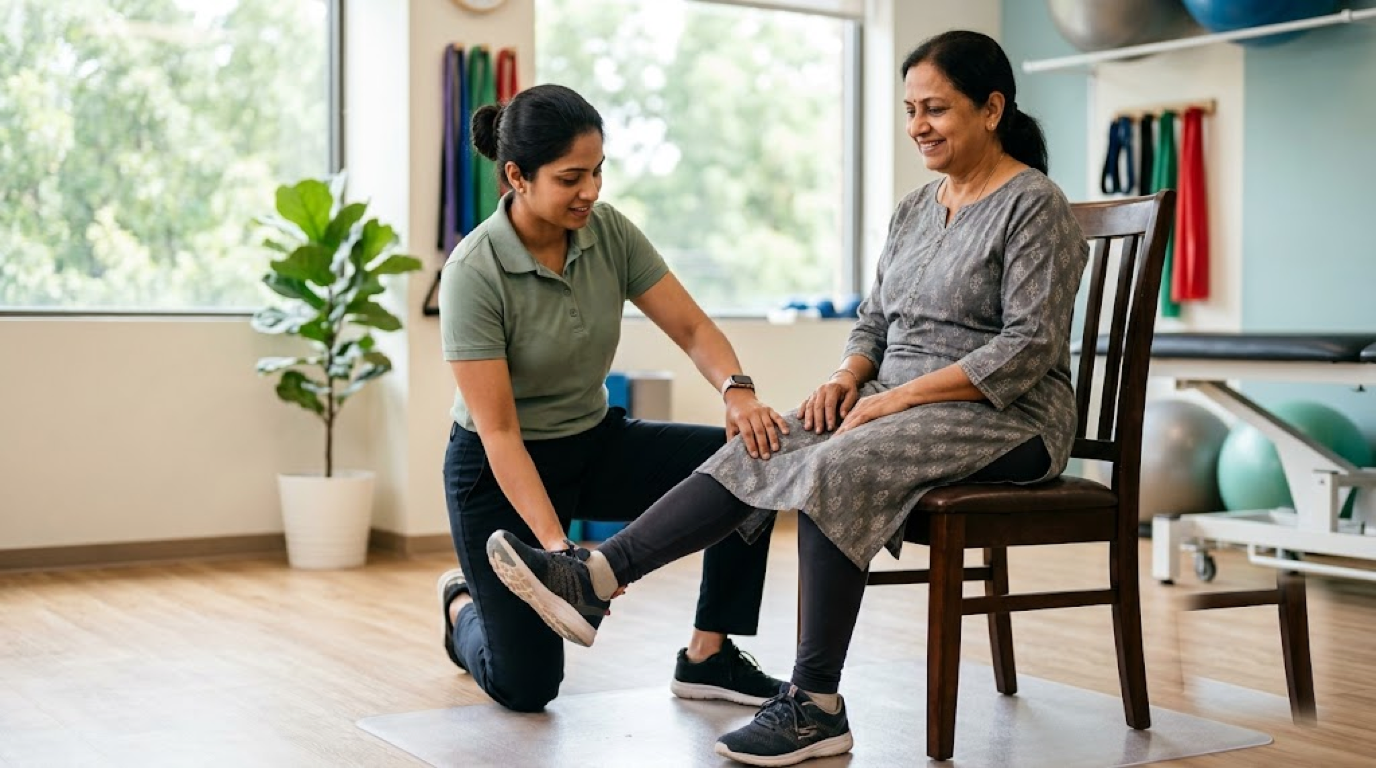
Walking is only one part of rehabilitation. Depending on your needs, your physiotherapist may recommend exercises for ankle movement, calf strength and balance. Ask them to show you each exercise, watch you try it and explain how often to do it.
Describe the walking you need to return to: reaching a bus stop, shopping, climbing stairs or standing at work. For everyday routes around Ranchi, ask how to prepare for slopes, broken paving and crowded spaces. These may place different demands on your ankle than walking indoors.
Ask what progress should look like before you increase activity. Useful signs may include a more comfortable walking pattern, better balance and tolerating your current distance without a lasting increase in symptoms. Recovery time varies with the injury and your usual activities.
When should I book a review?
Before leaving, agree on when to check in and what should prompt an earlier review. Tell your physiotherapist if pain or swelling keeps increasing, progress stalls, or the ankle repeatedly gives way. Those changes may mean your plan or diagnosis needs reassessment.
A brief note of your walking time, discomfort and next-morning symptoms can help you explain what is happening. The goal is a plan you understand and can adjust with professional guidance as everyday walking becomes easier.
Frequently Asked Questions
Take the next step
Ready to Start Your Treatment?
Book a consultation with our expert physiotherapists. No referral needed.
Book AppointmentRelated Articles
How to Set Up a Safe Space for Physiotherapy at Home
Simple tips to prepare a clear, comfortable space for home physiotherapy, choose stable support, and follow your exercises safely.

What to Wear and Bring to Physiotherapy in Ranchi
Getting ready for physiotherapy? Here is a simple guide to comfortable clothing, useful documents and what to bring to your appointment.