
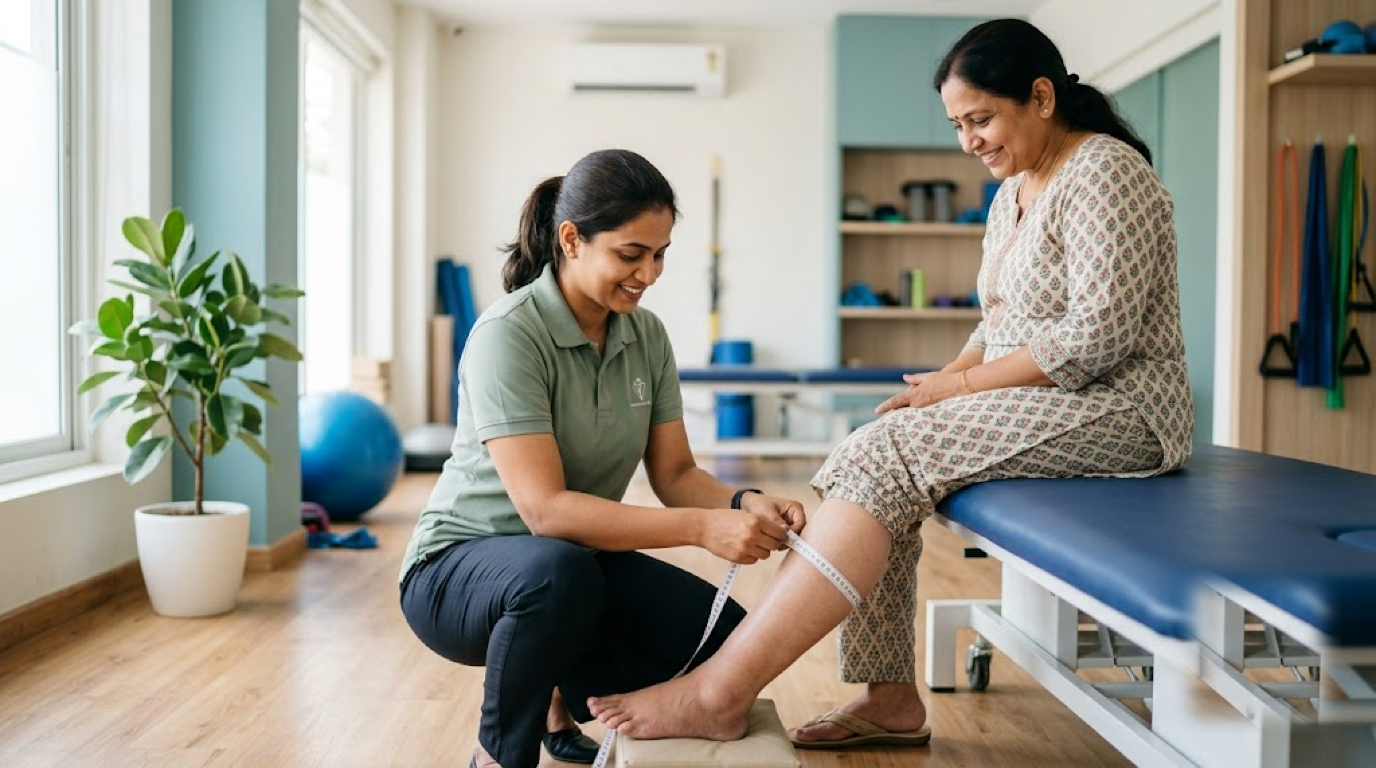
What to bring, what to wear and what to expect at your first physiotherapy assessment for lymphoedema.
Your first appointment for lymphoedema can bring plenty of questions. Why is the swelling there? Is movement safe? What might help? An assessment is a chance to discuss these concerns and understand the next steps at a comfortable pace.
At The RNB Clinic in Ranchi, this guide can help you prepare for that conversation. Lymphoedema is swelling linked to difficulty draining lymph fluid. It often needs ongoing management, and physiotherapy may help manage swelling, improve movement and support everyday activities.
Make a short note of your symptoms
Write down when the swelling started, which areas it affects and whether it changes through the day. Include any heaviness, tightness, aching, skin changes or difficulty with clothing, footwear and daily tasks. You do not need precise measurements or a symptom diary to attend.
Mention previous operations, cancer treatment, injuries, infections and any heart, kidney or circulation conditions. Swelling has several possible causes, so the physiotherapist may recommend medical assessment before starting treatment, particularly if the cause is unclear.
Bring useful records and wear comfortable clothing
Bring available referral letters, relevant reports, discharge summaries and a list of medicines. If you already use a compression sleeve, stocking or bandage, bring it along with any fitting information. Do not delay seeking advice simply because some records are missing.
Choose loose clothing that allows access to the swollen area, such as shorts for a leg assessment or a loose-sleeved top for an arm assessment. Follow your usual prescribed care unless advised otherwise; there is generally no need to fast. You can request privacy, a chaperone or a support person.
Know what the assessment may involve
The physiotherapist will usually ask about your health, symptoms and goals, then examine the affected area with your consent. They may check the skin, swelling, movement and strength, and take measurements to provide a starting point for monitoring changes.
The visit may focus mainly on assessment and planning. Depending on your needs, management can include skin care, suitable exercise, compression and, in some cases, specialised manual lymphatic drainage. This gentle technique differs from deep massage and is not necessary for everyone. Compression should be assessed for suitability and fit.
Plan your questions—and recognise when to seek help
Ask what you can safely do at home, how to care for your skin and whether compression is appropriate. Discuss practical concerns such as work, travel around Ranchi, treatment costs and follow-up visits. Before leaving, make sure you understand the plan and who to contact if symptoms change.
Do not wait for a routine physiotherapy appointment if swelling becomes suddenly worse or the skin becomes painful, hot or red, especially with fever or feeling unwell. Seek urgent medical assessment, as infection or a blood clot may need treatment. Chest pain or sudden breathlessness requires emergency care.
Frequently Asked Questions
Take the next step
Ready to Start Your Treatment?
Book a consultation with our expert physiotherapists. No referral needed.
Book AppointmentRelated Articles
Parkinson’s Walking Difficulties: Your Physio Assessment
Learn what to share at a physiotherapy assessment for Parkinson’s, from freezing and falls to medicine timing and everyday walking goals.
Achilles Tendon Pain When Walking: Your Physio Assessment
Learn what to share at your physiotherapy assessment, what may be checked, and which Achilles tendon symptoms need urgent medical attention.